5G-Advanced: Revolutionizing Healthcare with Dedicated Air Bridge
Beijing, Wednesday, 13 November 2024.
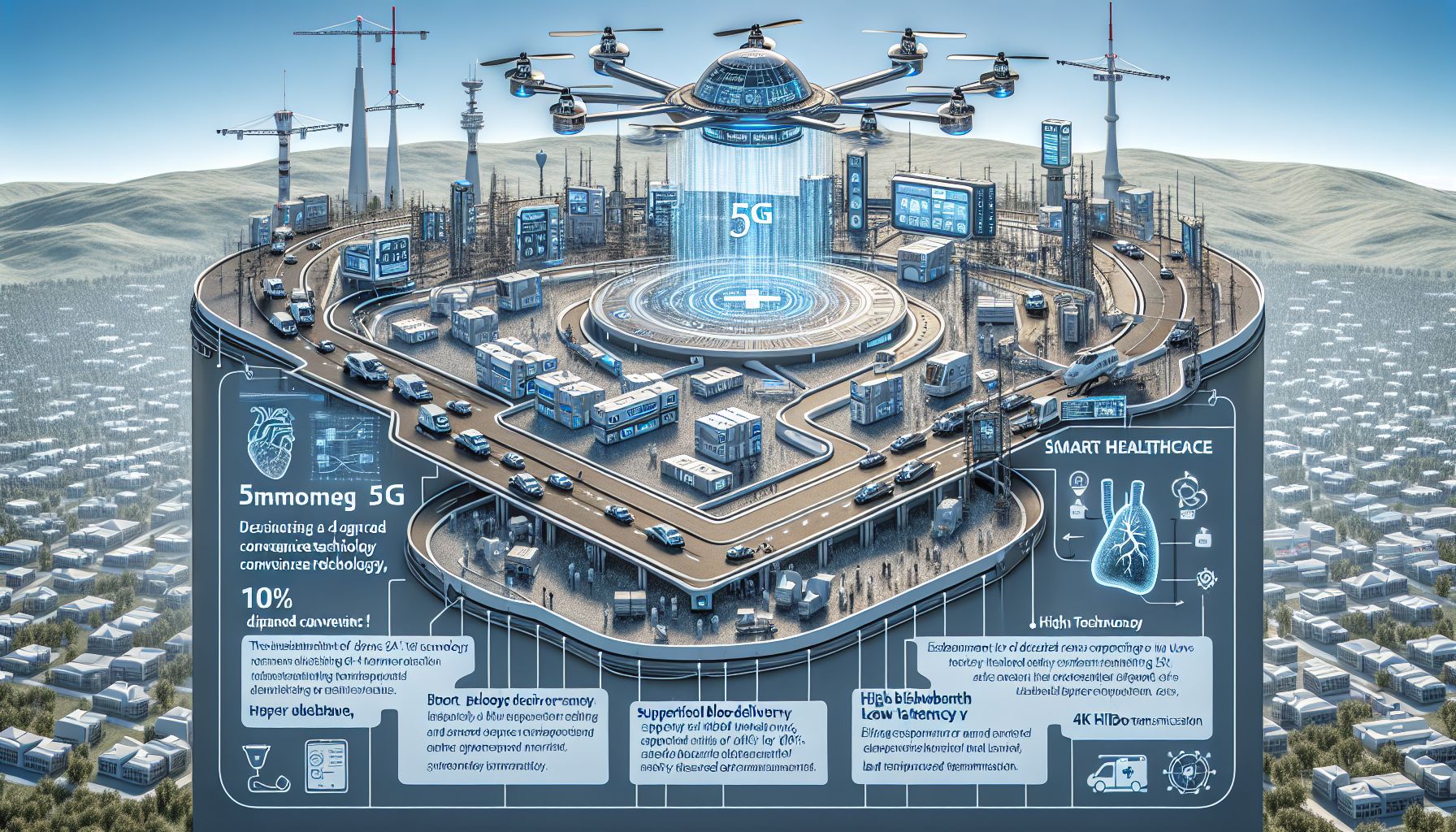
China Telecom unveiled groundbreaking ‘super air-ground convergence technology’ at MWC Shanghai 2024, establishing a dedicated air bridge for smart healthcare. This innovation enables efficient blood delivery via UAVs, improving emergency response times by 60% and halving transport durations compared to ground methods. The system’s high bandwidth and low latency support 4K HD video transmission, enhancing medical resource distribution and patient care, particularly benefiting rural areas with limited access to healthcare facilities.
Transformative Impact on Healthcare Logistics
The introduction of 5G-Advanced (5G-A) technology in healthcare logistics marks a significant leap forward in addressing two persistent challenges: the slow response to urgent medical needs and the inequitable distribution of medical resources. By leveraging Unmanned Aerial Vehicles (UAVs), China Telecom’s air bridge facilitates rapid blood transport, particularly to rural regions where patients often face substantial delays. For instance, residents of Hongtong Village, Hangzhou, previously spent hours traveling for medical checks, but with the new UAV routes, they can receive timely medical supplies and care[1].
Innovative UAV Applications in Blood Delivery
The UAV medical delivery system, developed in partnership with Hangzhou Antwork Network Technology Co., Ltd., has established the first regular UAV route for emergent blood delivery in China. This system characterizes high bandwidth and resilience to adverse weather conditions, such as scale-5 wind resistance, ensuring reliable service. The UAVs can deliver blood samples and results within minutes, improving treatment efficiency and patient outcomes across Zhejiang’s third-class hospitals. This advancement signifies a historic milestone in clinical healthcare, as noted by industry experts, highlighting the critical role of UAV technology[1].
Integrating 5G-A and AI for Enhanced Healthcare Solutions
At the 2024 Global Mobile Broadband Forum, industry leaders emphasized the convergence of 5G-A and AI as a transformative force for various sectors, particularly healthcare. This integration empowers societies by creating intelligent, efficient, and green networks. The forum highlighted how 5G-A networks, evolving towards low latency and universal gigabit uplink, are crucial for innovations like remote surgery and telemedicine. Such advancements are set to reshape healthcare by providing enhanced patient care through advanced connectivity and AI capabilities, as projected by experts like Javan Erfanian and Sven Zhu[2].
Future Prospects and Challenges
The deployment of 5G-A in healthcare is poised to revolutionize medical service delivery. However, it also presents challenges such as ensuring data security and managing the ethical implications of AI in healthcare. As the technology matures, it will be essential to address these issues while fostering innovation. The integration of edge computing with 5G-A is expected to enhance service quality further by reducing latency and improving data management, crucial for real-time healthcare applications. This strategic alignment of technology offers a promising future for smart healthcare, although continuous efforts in research and development are necessary to maintain progress[3].