MSI Unveils Compact Powerhouse: New Fanless Pico-ITX Computer
Taipei, Wednesday, 30 October 2024.
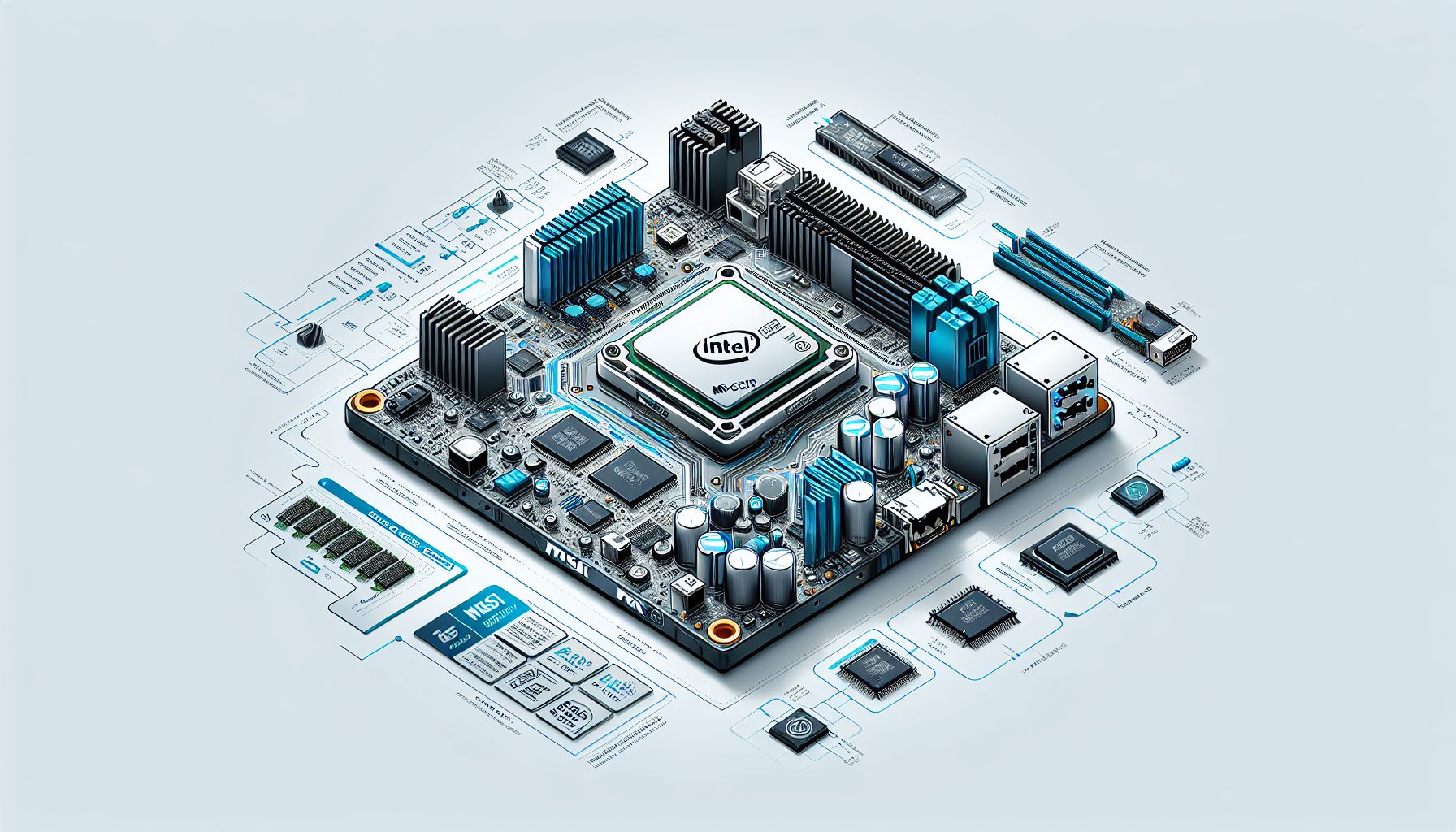
MSI introduces the MS-CF16, a fanless single board computer powered by Intel Alder Lake-N processors. This compact Pico-ITX device supports up to 16GB LPDDR5 RAM and operates in extreme temperatures, making it ideal for industrial and embedded applications.
A Technological Marvel
The MSI MS-CF16 stands out as a highly versatile single board computer (SBC) designed to meet the rigorous demands of industrial automation and edge computing. Leveraging Intel’s Alder Lake-N processors, the MS-CF16 promises a blend of high performance and energy efficiency, making it suitable for deployment in environments that require robust computational power without the noise or maintenance associated with traditional cooling systems[1].
Features and Specifications
One of the flagship features of the MS-CF16 is its support for up to 16GB of LPDDR5 RAM, allowing for smooth multitasking and processing of complex operations. The board’s connectivity options include 2.5GbE and 1GbE LAN ports, multiple USB 3.2 and 3.0 ports, and two M.2 sockets, offering ample expansion possibilities[2]. Video outputs are supported via HDMI and LVDS/eDP connectors, with resolutions up to 3840 x 2160 at 30Hz, catering to dual independent display needs[1].
Performance in Extreme Conditions
The MS-CF16 is engineered to function reliably across a wide temperature range, from -40°C to 85°C, ensuring consistent performance in harsh industrial and outdoor environments. This makes it particularly suitable for applications in industrial automation, kiosks, medical devices, and outdoor digital signage, where durability and uptime are critical[3].
Comparisons and Use Cases
In comparison to similar products like Jetway’s JPIC-ADN1 and AAEON’s PICO-ASL4, the MS-CF16 offers competitive features and a fanless design that enhances its longevity and energy efficiency. Its low power requirements and compact form factor make it an ideal choice for space-constrained applications such as IoT edge computing and portable medical devices[2].
Pros and Cons
One of the primary advantages of the MS-CF16 is its fanless design, which reduces noise and maintenance while improving reliability in dust-prone environments. However, potential drawbacks include the lack of pricing and availability information, which could hinder planning for deployment in large-scale projects[1].
Recommendations
For users in industrial settings, the MS-CF16 is recommended for its robust performance and adaptability to extreme conditions. It is also suited for businesses in need of reliable computing solutions for smart city applications and digital signage. Organizations should contact MSI partners for detailed pricing and availability to integrate this powerful tool into their operations effectively[3].