IBM's Mainframe Slowdown Stalls Growth, Red Hat Shines
Armonk, Thursday, 24 October 2024.
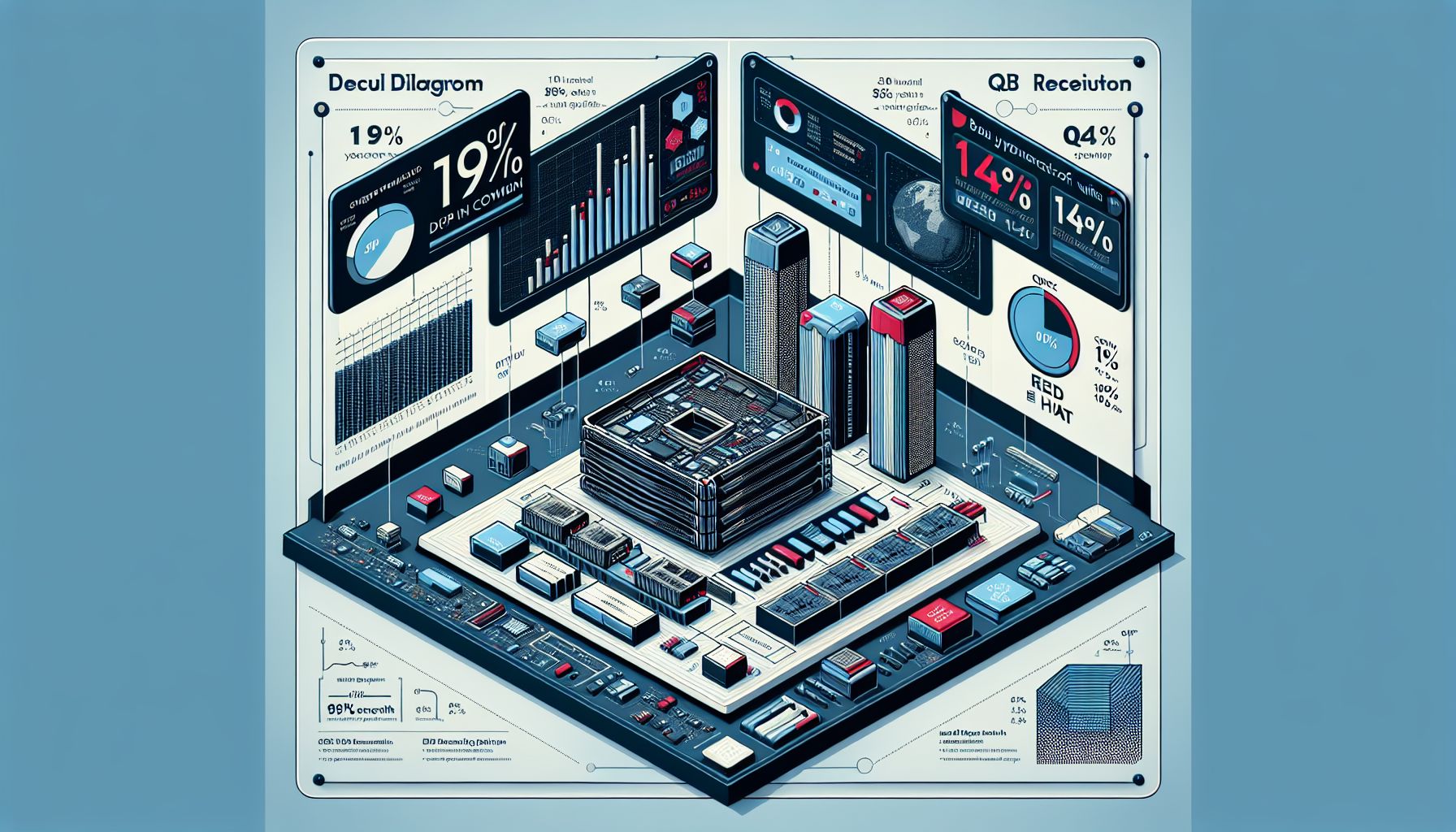
IBM’s Q3 results reveal a 19% drop in mainframe revenue, leading to overall growth of just 1-2%. Despite this setback, Red Hat continues to flourish, with 14% year-over-year expansion. CEO Arvind Krishna cites economic uncertainty as a key factor in the company’s performance.
Economic Factors Behind IBM’s Slowdown
IBM’s recent financial results have placed a spotlight on the challenges facing its mainframe business. A 19% decline in mainframe revenue has significantly dampened the company’s overall growth prospects, which now stand at a modest 1-2% for the third quarter. CEO Arvind Krishna attributed this downturn to a myriad of economic uncertainties, including geopolitical tensions, impending elections, and fluctuating interest rates and inflation levels. These factors have created an unpredictable business environment, impacting not only IBM but the broader technology sector as well[1].
The Red Hat Success Story
In contrast to the mainframe struggles, IBM’s acquisition of Red Hat continues to prove its worth. Since the acquisition five years ago, Red Hat has doubled in size, achieving a mid-teens compound annual growth rate (CAGR). Its portfolio expanded by 14% year-over-year, contributing $6.5 billion to IBM’s software revenue, which grew by 9.7% to reach the same amount. OpenShift, a standout performer, saw its annual recurring revenue soar from $100 million to $1.3 billion, marking more than a tenfold increase. This growth underscores the strategic value of Red Hat in IBM’s broader transformation efforts, aimed at transitioning to a higher growth, higher margin business model[1].
Emerging Opportunities in AI and Consulting
Despite the setbacks in traditional revenue streams, IBM’s generative AI portfolio has shown promise, generating $3 billion in revenue. The company’s recent acquisitions, such as Apptio and Hashi, are expected to mirror this success. IBM’s consulting division, although experiencing flat revenue, reported an 11% profit improvement, attributed to productivity enhancements. This reflects IBM’s strategic focus on leveraging AI and consulting to drive future growth[1].
Financial Implications and Market Reactions
The financial impact of IBM’s mainframe revenue decline was evident in its Q3 results, with a net loss of $330 million and revenue falling approximately $100 million short of forecasts. Following the announcement, IBM’s stock price experienced volatility, initially dropping from $233 to $216 before rebounding to around $225. This market reaction highlights investor concerns over IBM’s ability to navigate the current economic landscape and achieve its growth targets[1].
Looking Ahead: A Mixed Outlook
As IBM moves forward, its outlook remains mixed. While the mainframe business faces challenges, the strength of Red Hat and the potential of its AI initiatives offer a glimmer of hope. IBM anticipates $3.5 billion in savings from productivity initiatives, up from a previous estimate of $3 billion. CEO Arvind Krishna remains optimistic, stating, ‘We have made solid progress in transitioning our portfolio to a higher growth, higher margin business that is well positioned as we head into next year.’ However, the company’s ability to sustain this momentum will be crucial in determining its long-term success in the ever-evolving technology landscape[1].