Radxa Launches Compact Cubie A7Z to Rival Raspberry Pi
London, Tuesday, 26 August 2025.
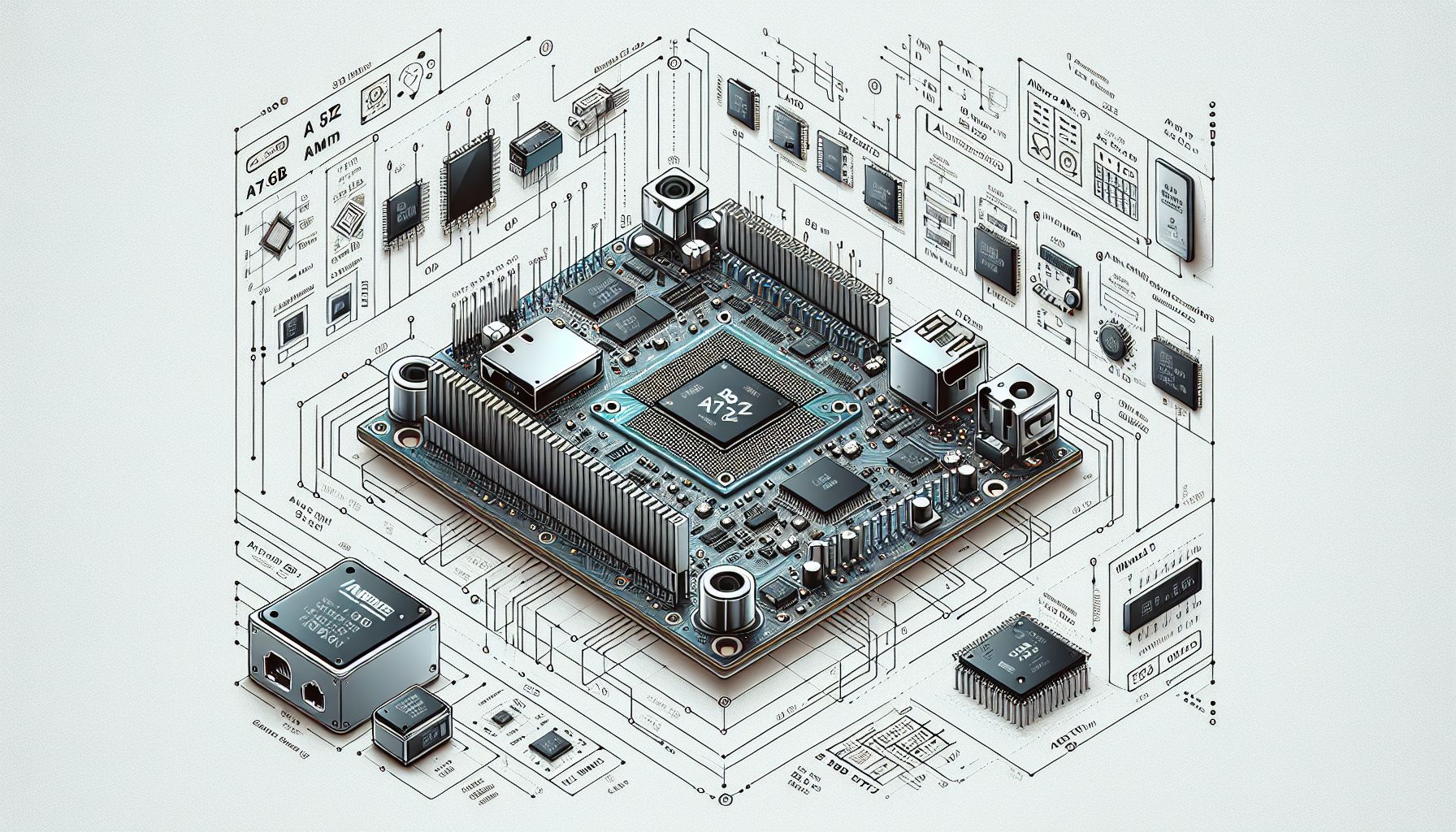
Radxa revealed the Cubie A7Z, a 65 × 30 mm single-board computer featuring an Allwinner A733 SoC with 8GB RAM and 3 TOPS NPU, designed for AI and multimedia applications.
Advanced Features for AI and Multimedia Applications
The Cubie A7Z is equipped with the Allwinner A733 system-on-chip, which incorporates a hybrid octa-core CPU composed of two Arm Cortex-A76 cores running up to 2.0 GHz, and six Cortex-A55 efficiency cores operating at up to 1.8 GHz [1]. Its neural processing unit (NPU) supports up to 3 trillion operations per second (TOPS), enhancing AI performance for various applications in edge computing and embedded systems [1]. Additionally, the Radxa Cubie A7Z supports multimedia functionalities, offering a single Micro HDMI 2.0 port capable of 4K resolution at 60 frames per second [1].
Comparative Analysis with Raspberry Pi
When compared to the popular Raspberry Pi Zero, the Radxa Cubie A7Z holds a distinctive edge in processing power and versatility. The Cubie A7Z supports up to 8 GB of RAM, significantly surpassing the typical constraints of the Raspberry Pi Zero, which generally offers up to 512 MB [1][2]. Moreover, the inclusion of onboard Wi-Fi 6 and Bluetooth 5.4 ensures robust connectivity options [1]. The Cubie A7Z further includes advanced expansion capabilities with support for PCIe Gen3.0, which allows for NVMe SSD expansion, thus offering higher storage and faster data transfer rates compared to its competitors in the single-board computer segment [1].
European Market Relevance
Targeted towards the European market, the Radxa Cubie A7Z is available through sellers like Arace Tech and AliExpress, with different models offering 1 GB, 4 GB, and 8 GB RAM configurations priced at $28.58, $59.41, and $97.24, respectively [1]. This pricing strategy makes the Cubie A7Z an attractive option for developers and technology enthusiasts seeking budget-friendly yet powerful alternatives to the Raspberry Pi, particularly for AI-driven applications [1]. The availability across these platforms ensures that the Cubie A7Z can reach a broad audience, facilitating innovations in AI and edge computing across Europe.
Future Prospects and Applications
With its sophisticated hardware capabilities, the Cubie A7Z holds significant potential for advancing projects in AI, IoT, and multimedia applications. The device’s support for multiple operating systems, including Debian Linux, Buildroot, Tina Linux, and Android 13, further enhances its adaptability for various development environments [1]. As edge computing continues to gain traction in Europe, the Cubie A7Z’s introduction aligns with growing demand for more capable and affordable hardware solutions designed to handle intensive AI workloads. The board’s feat of integrating high-level computations within compact dimensions marks a pivotal step forward for engineers and developers seeking comprehensive solutions without spatial limitations.