AI Revolution in Medical Imaging: Major Breakthroughs Signal $53 Billion Market by 2034
Taipei, Tuesday, 3 December 2024.
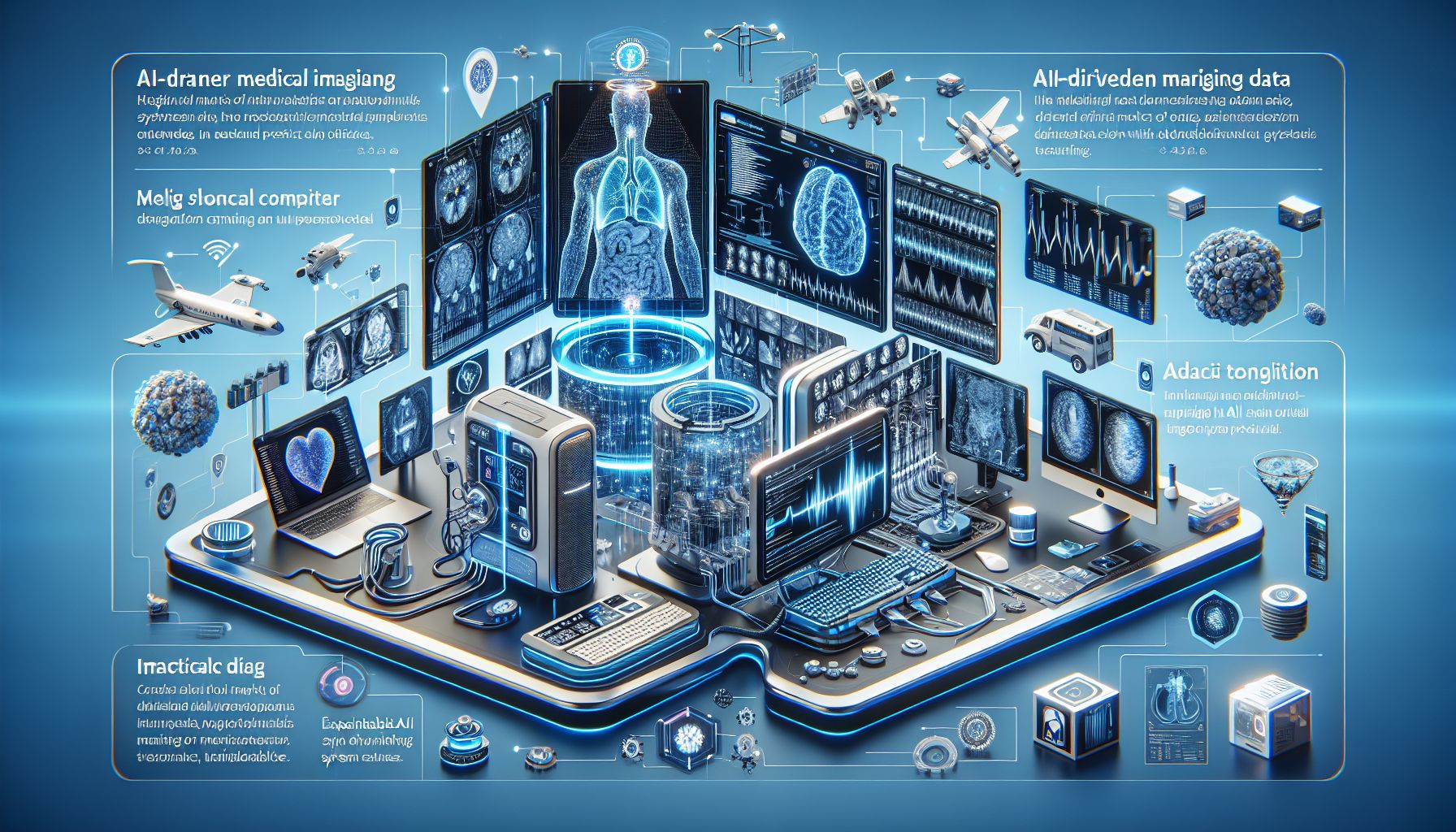
The healthcare sector is witnessing unprecedented transformation as AI and computer vision reshape diagnostic capabilities. Recent developments, including IEI’s new AI-driven medical computer and Philips’ latest imaging innovations at RSNA24, showcase how AI is enhancing diagnostic precision while addressing critical healthcare staff shortages. With the market projected to reach $53 billion by 2034, these technologies are proving essential in managing the growing volume of medical imaging data, with over 3 billion images shared daily contributing to AI system training. The integration of explainable AI (XAI) is particularly noteworthy, making AI decisions more transparent and trustworthy for healthcare professionals.
IEI’s AI-Driven Medical Computer: A Game Changer
IEI Integration Corp.’s introduction of the HTB-230D-R680E represents a significant advancement in medical imaging technology. Launched on December 2, 2024, this AI-driven computer is equipped with the latest Intel® Core™ i9/i7/i5 processors from the 13th generation, up to 128 GB DDR5 memory, and support for NVIDIA Quadro RTX Ampere GPUs. These features position it as a powerful tool for enhancing precision in diagnostic imaging. The device’s 10.1-inch PCAP touchscreen not only improves workflow efficiency for medical personnel but also supports 10-point touch capabilities, facilitating more intuitive interactions with complex imaging data[1].
Philips’ Innovations at RSNA24
At the recent RSNA24 conference, Philips unveiled a suite of AI-powered diagnostic imaging tools aimed at streamlining radiology workflows and addressing the industry’s staffing challenges. Their helium-free 1.5T MRI scanner, integrated with AI-driven reporting capabilities for neurology and oncology, exemplifies how AI can reduce administrative burdens while maintaining high diagnostic accuracy. Philips’ collaboration with AWS to enhance cloud-based diagnostics further underscores their commitment to integrating AI into clinical workflows, thereby improving efficiency and patient outcomes[2].
The Role of Explainable AI in Healthcare
As AI becomes more prevalent in healthcare, the need for transparency in AI-driven decisions has become critical. Explainable AI (XAI) addresses this need by making AI systems more interpretable and trustworthy for clinicians. By enhancing diagnostic accuracy across fields such as radiology and pathology, XAI empowers healthcare professionals to make informed decisions while fostering greater collaboration between AI systems and human expertise. This transparency is crucial for building trust in AI technologies and ensuring that patient care decisions are both accurate and equitable[3].
Future Prospects and Challenges
Despite the promising advancements, integrating AI into healthcare systems is not without challenges. These include data quality issues, legacy system integration, and regulatory compliance hurdles. However, the projected growth of the healthcare computer vision market to $53 billion by 2034 reflects the sector’s determination to overcome these barriers. As more healthcare facilities adopt AI technologies, the focus will be on ensuring robust data security measures, gaining regulatory approvals, and training healthcare professionals to effectively utilize these tools[4].