European Innovation Boosts Autonomous Driving Safety
Munich, Saturday, 25 January 2025.
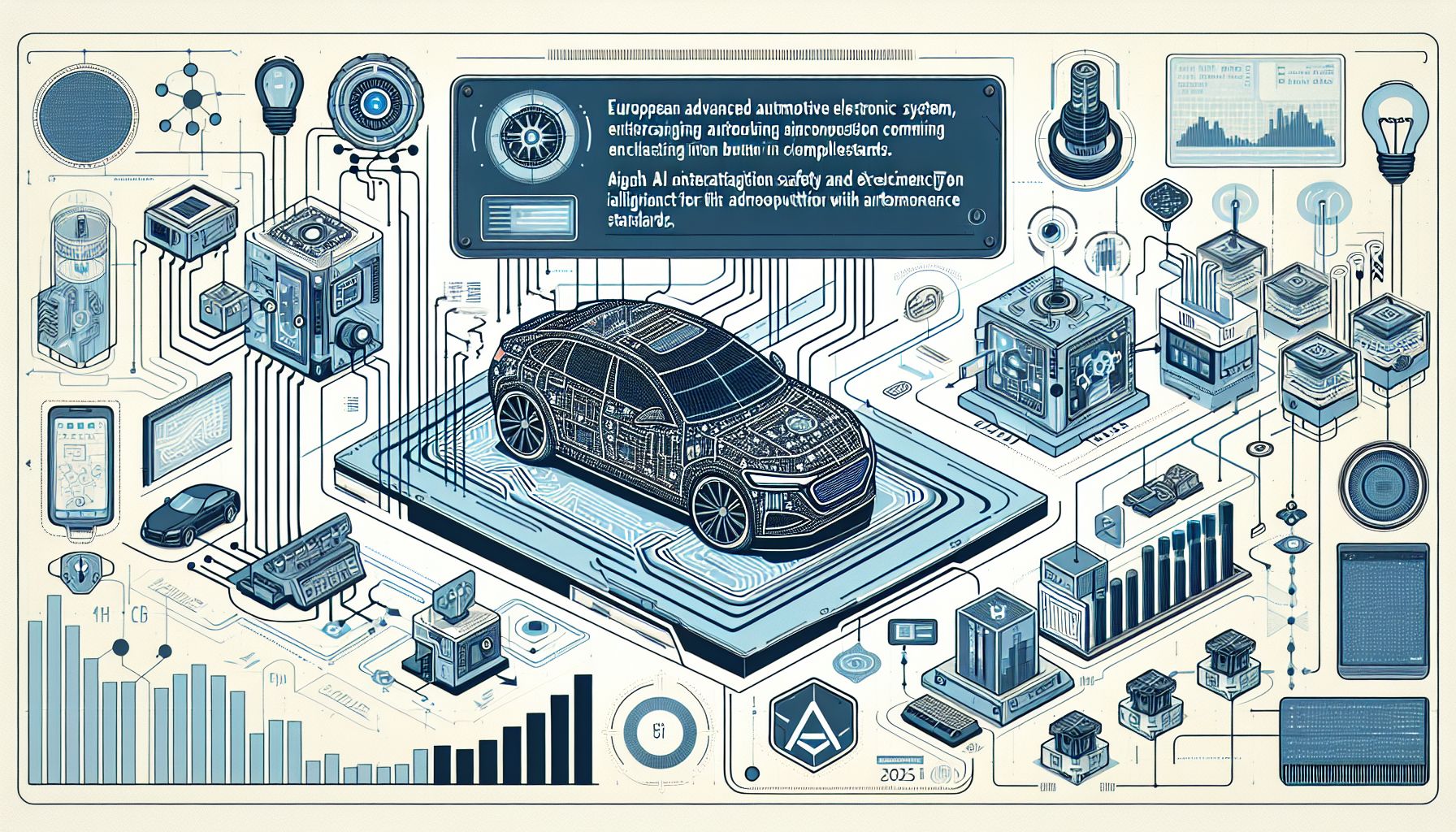
European automotive electronics advance with AI integration to enhance safety and efficiency, aligning with compliance standards. This progress is critical for autonomous vehicle adoption and growth by 2025.
Market Growth and European Standards
The autonomous vehicle market is experiencing remarkable growth, projected to reach 99.37 billion in 2025 [2]. European initiatives are leading the charge with recent developments in standardization, notably through PODIUM’s activities focused on driving interoperability [3]. The market’s trajectory shows a compelling compound annual growth rate of 35.1% [2], reflecting strong confidence in autonomous technology adoption. A significant milestone was achieved with the recent adoption of new DCAS (Driver Control Assistance Systems) regulations by UNECE [3], establishing a robust framework for autonomous vehicle deployment.
Semiconductor Integration and AI Development
The semiconductor industry plays a pivotal role in advancing autonomous vehicle capabilities. According to Michael Munsey, Vice President of the Semiconductor Industry at Siemens Digital Industries Software, semiconductors have become fundamental to our increasingly digital automotive landscape [1]. The integration of advanced electronic systems is particularly evident in European manufacturing, where digital transformation practices are being rapidly adopted to enhance efficiency and competitiveness [1].
Infrastructure and Testing Framework
European authorities have recently issued comprehensive recommendations for testing autonomous vehicles on public roads [3], marking a crucial step forward in real-world implementation. This development coincides with the launch of new Cooperative Connected Automated Mobility (CCAM) projects [3], demonstrating Europe’s commitment to creating a robust infrastructure for autonomous vehicles. The European Union’s focus on establishing a Common European Mobility Data Space [3] further supports this initiative by ensuring standardized data sharing and interoperability across the continent.
Supply Chain and Manufacturing Evolution
The silver powder market, essential for electronic component manufacturing, is projected to reach $1.29 billion by 2031 [5], supporting the growing demand for automotive electronics. This growth is particularly significant given the EU Chips Act’s ambitious goal to double Europe’s global chip production share by 2030 [5]. However, industry analysts at Gartner note that automakers face challenges regarding emission regulations and growing trade tensions [4], which could impact the development and distribution of autonomous vehicle technologies.
sources
- blogs.sw.siemens.com
- www.thebusinessresearchcompany.com
- www.connectedautomateddriving.eu
- www.gartner.com
- www.globenewswire.com