Breakthrough in 3D Semiconductor Alignment Promises Manufacturing Revolution
San Francisco, Friday, 8 November 2024.
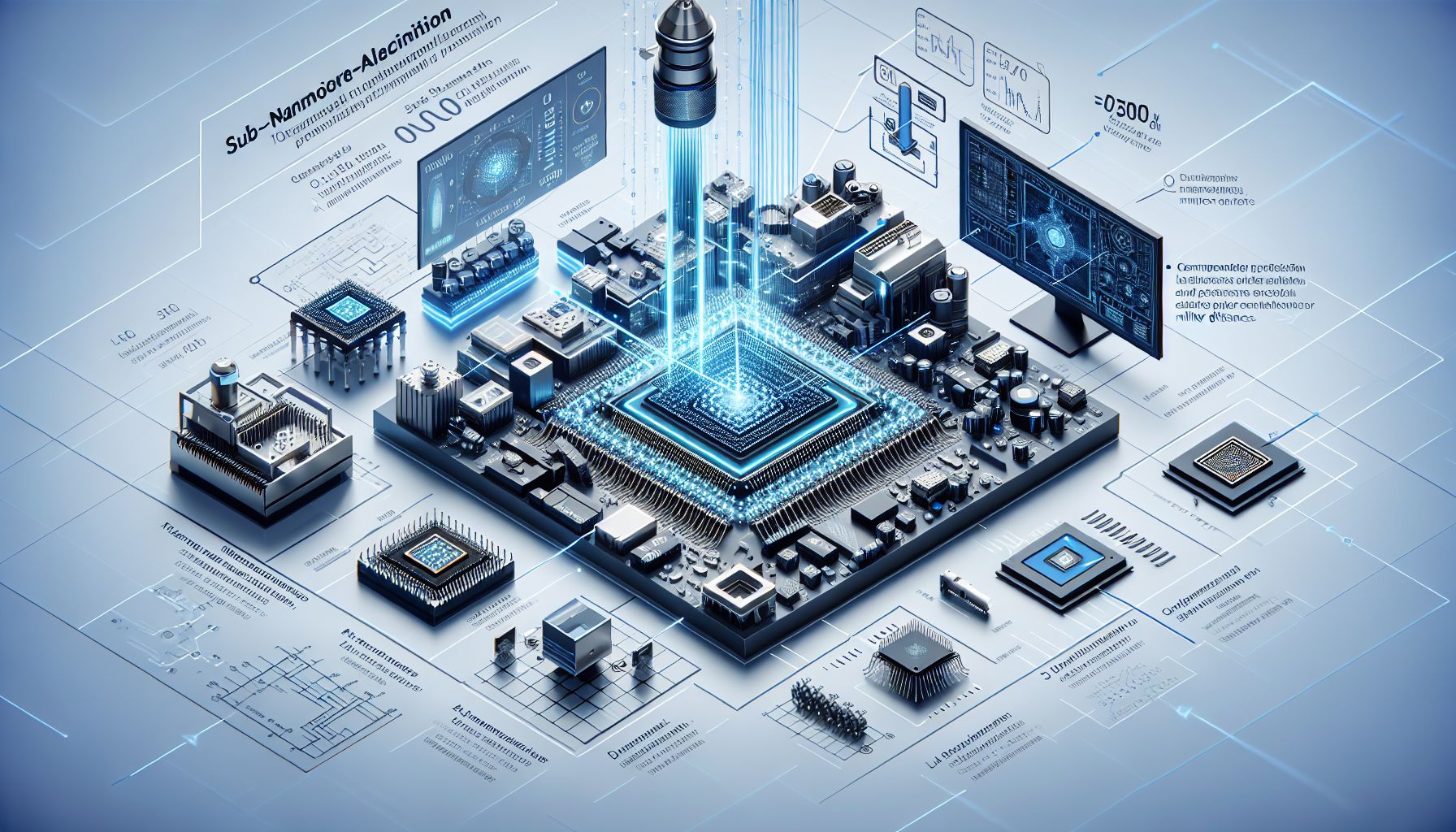
A novel ultraprecise method for aligning 3D semiconductor chips achieves sub-nanometer precision, potentially transforming advanced manufacturing. Using metasurface alignment marks, a laser, and a camera, the technique offers λ0/50,000 lateral and λ0/6,300 axial precision over millimeter distances, without microscopic imaging.
The Promise of Enhanced Precision
In the evolving landscape of semiconductor manufacturing, precision and alignment are paramount. The new method utilizing metasurface alignment marks with laser and camera technology introduces an unprecedented level of precision. This technique, offering λ0/50,000 lateral and λ0/6,300 axial precision, represents a significant leap forward. By eliminating the need for traditional microscopic imaging, it simplifies the alignment process, paving the way for more efficient manufacturing workflows[1].
Implications for Semiconductor Manufacturing
The potential applications of this ultraprecise alignment method are vast. As semiconductor devices become increasingly complex, the demand for accurate alignment of multi-layer patterns grows. This new method addresses these demands, offering a cost-effective solution for aligning 3D chips. The method is particularly beneficial for next-generation 3D and heterogeneous integrated optical and electronic chips, where precise lateral and vertical alignments are crucial for functionality and performance[2].
Beyond Semiconductors: Wider Applications
The implications of this alignment technique extend beyond semiconductors. With its ability to measure relative positions with sub-nanometer precision, it holds promise for a range of applications, including displacement sensors and ultra-sensitive microphones. The technique’s reliance on simple components like lasers and cameras makes it adaptable for various industries, including photonics and biotechnology. It also offers potential in creating displacement sensors for different physical quantities, thereby broadening its applicability across sectors[1][2].
Challenges and Future Prospects
While the method offers significant advancements, challenges remain. The precision required in lens fabrication and positioning is critical, and any deviations could impact the effectiveness of the alignment. Moreover, the adoption of this technology in mass manufacturing hinges on overcoming these precision challenges and ensuring cost-effectiveness. As the industry continues to innovate, further refinements and adaptations of this method are expected, potentially setting new standards in semiconductor manufacturing and beyond[1][3].