Community Refines SG90 Servo Controller Designs for DIY Projects
Online, Wednesday, 18 December 2024.
Electronics enthusiasts are enhancing SG90 servo controller schematics, focusing on PCB design and effective use of I2C and UART interfaces for DIY applications.
Advanced Control System Development
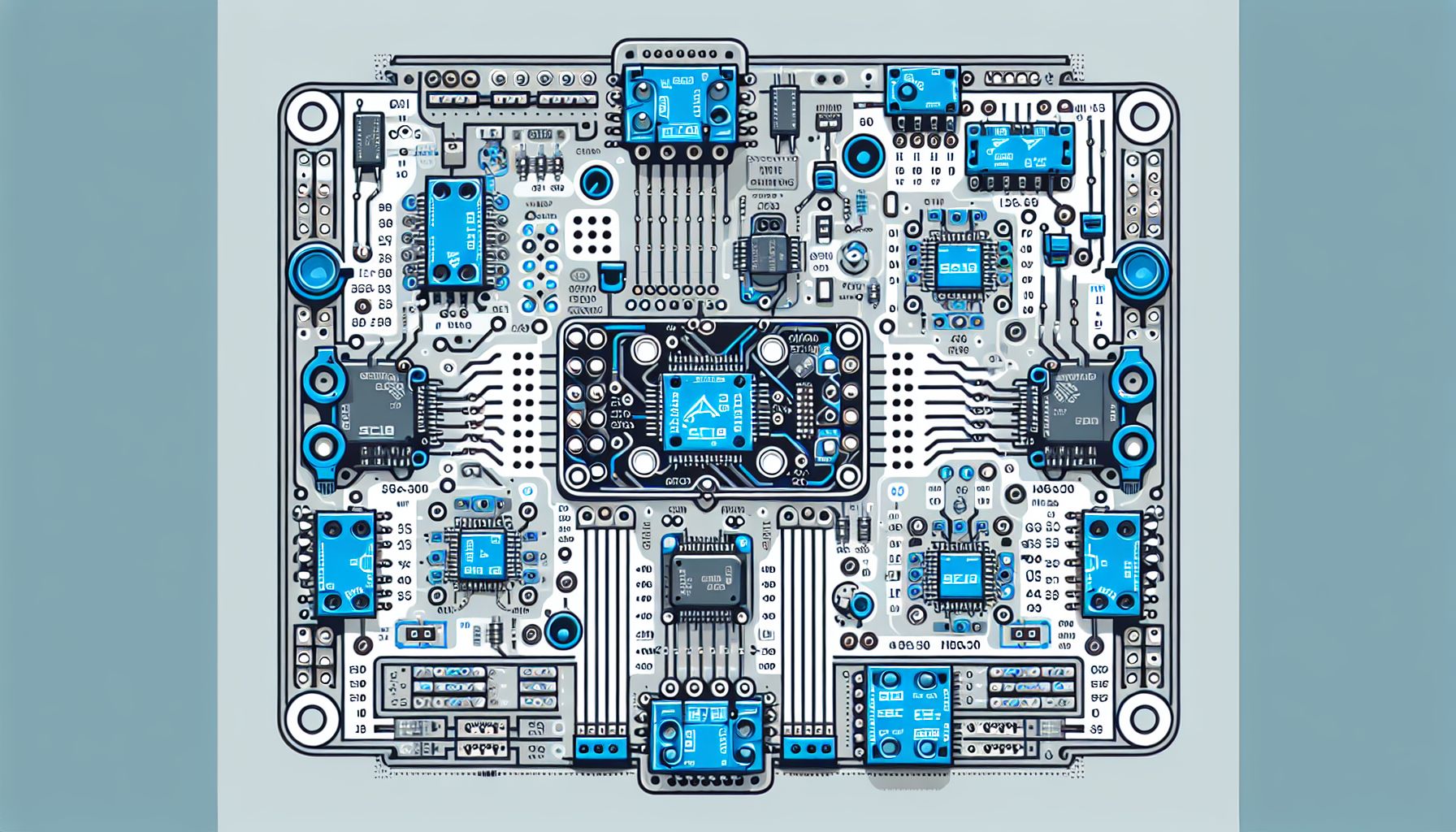
A significant development in the DIY electronics community involves sophisticated modifications to the SG90 servo system, incorporating the DRV8231ADSGR motor driver and STM32F301 MCU for enhanced control capabilities [1]. This setup enables precise current sensing and advanced control theory implementation, marking a notable advancement in hobby-grade servo control [1]. The project utilizes a four-layer PCB design, with dedicated layers for signal processing, ground planes, and power distribution [1].
Technical Implementation Details
The design exposes critical internal connections of the SG90 servo, including motor terminals (M+, M-) and potentiometer connections (POT, VREF, GND), enabling direct access for custom control implementations [1]. Communication protocols have been carefully integrated, with both I2C and UART interfaces available for command transmission and status monitoring [1]. This dual-protocol approach provides flexibility for various application requirements [GPT].
Educational Impact and Community Response
The project aligns with growing interest in robotics education and STEM learning, as evidenced by the increasing adoption of servo-based projects in educational contexts [7]. Modern servo control projects like this are becoming essential components in STEM education, providing hands-on experience with real-world engineering challenges [7]. The community’s focus on detailed documentation and schematic refinement demonstrates a commitment to making advanced electronics more accessible to hobbyists [GPT].
Future Applications and Development
This refined servo controller design shows particular promise for integration into more complex robotics projects [GPT]. While the current implementation focuses on single-servo control, the architecture could potentially support multiple servo configurations for more sophisticated applications [1]. However, developers should note that successful implementation requires careful attention to power distribution and signal integrity across the four-layer PCB design [1].