STMicroelectronics Introduces NUCLEO-N657X0-Q Development Board
Geneva, Saturday, 21 December 2024.
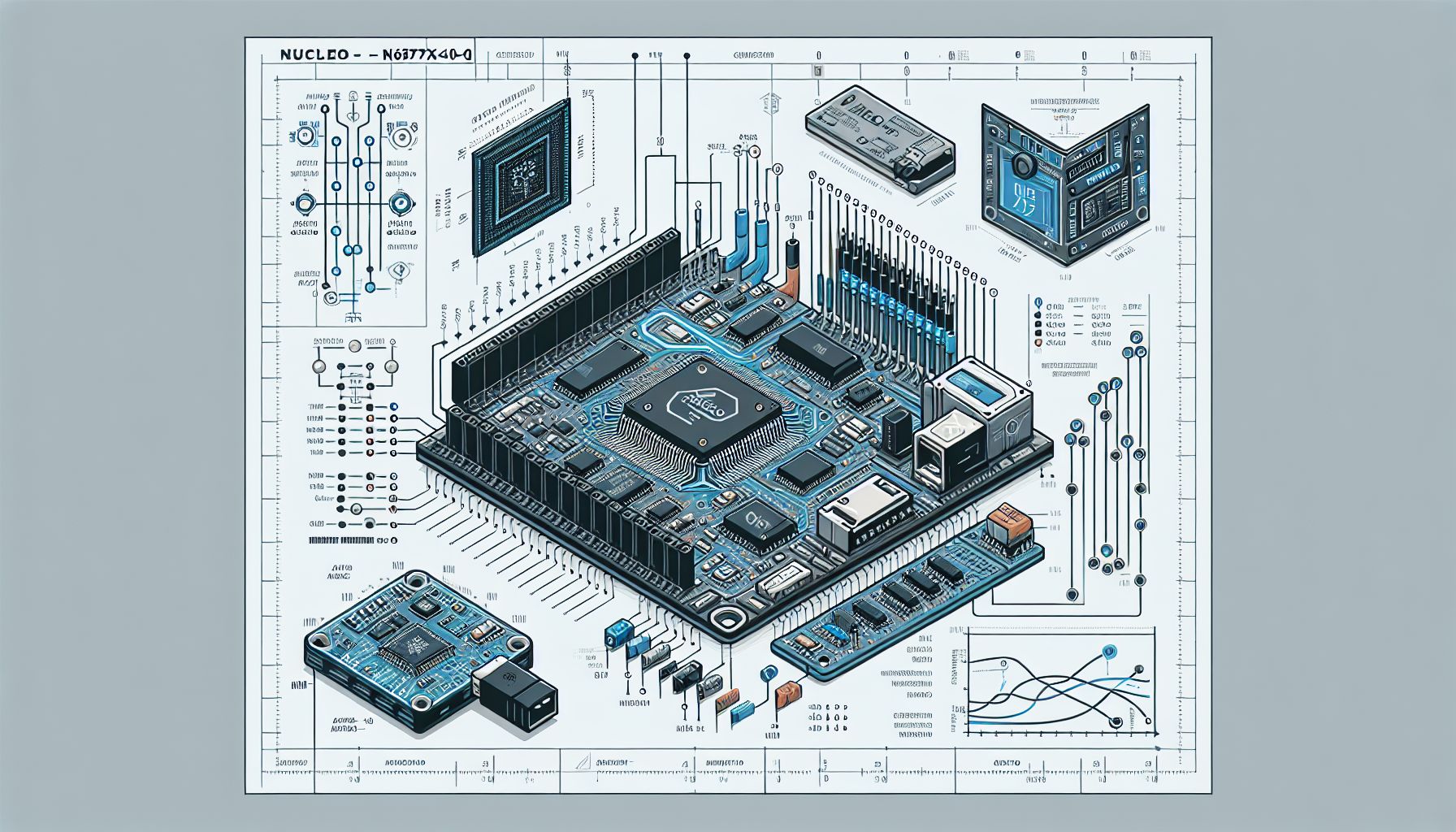
STMicroelectronics has launched the NUCLEO-N657X0-Q, a versatile STM32 development board supporting Arduino and ST morpho connectivity, ideal for rapid prototyping and diverse embedded applications.
Advanced Development Features
The NUCLEO-N657X0-Q represents a significant advancement in STM32’s Nucleo-144 development platform, offering developers comprehensive prototyping capabilities with flexible performance and power consumption options [1]. A standout feature is the board’s integrated SMPS (Switched-Mode Power Supply), which substantially reduces power consumption during operation [1]. The development board comes equipped with the ST-LINK debugger/programmer, eliminating the need for separate programming hardware [1].
Connectivity and Expansion Options
The board’s versatility is enhanced through its dual connectivity options. It features both the ST Zio connector, which extends ARDUINO® Uno V3 compatibility, and ST morpho headers, enabling developers to expand functionality through a wide range of specialized shields [1]. This compatibility with the extensive Arduino ecosystem makes it particularly valuable for rapid prototyping and testing [2]. The platform supports various STM32 processor series, including the latest STM32H7xx and STM32U5xx families [2].
Development Environment and Software Support
Developers can leverage comprehensive software support through the STM32Cube MCU Package, which includes free software libraries and example applications [1]. The board supports multiple development environments, including popular IDEs and the Embedded Coder Support Package, which was updated as recently as December 11, 2024 [2]. This support enables features such as real-time parameter tuning, processor-in-the-loop testing, and automated build and deployment capabilities [2].
Technical Implementation Considerations
When working with the NUCLEO-N657X0-Q, developers should consider key technical aspects such as power supply requirements and peripheral configurations. Based on similar Nucleo boards, it’s recommended to maintain operating voltages within the 2.0V to 3.6V range [5]. The board supports various communication interfaces including I2C, USART, and SPI, making it suitable for diverse applications from IoT projects to industrial automation [6]. Developers should carefully manage pin assignments to avoid conflicts when utilizing multiple communication interfaces simultaneously [6].