NASA's Apollo-Era Circuit Board Reveals 1960s Space Tech Secrets
Online, Monday, 25 November 2024.
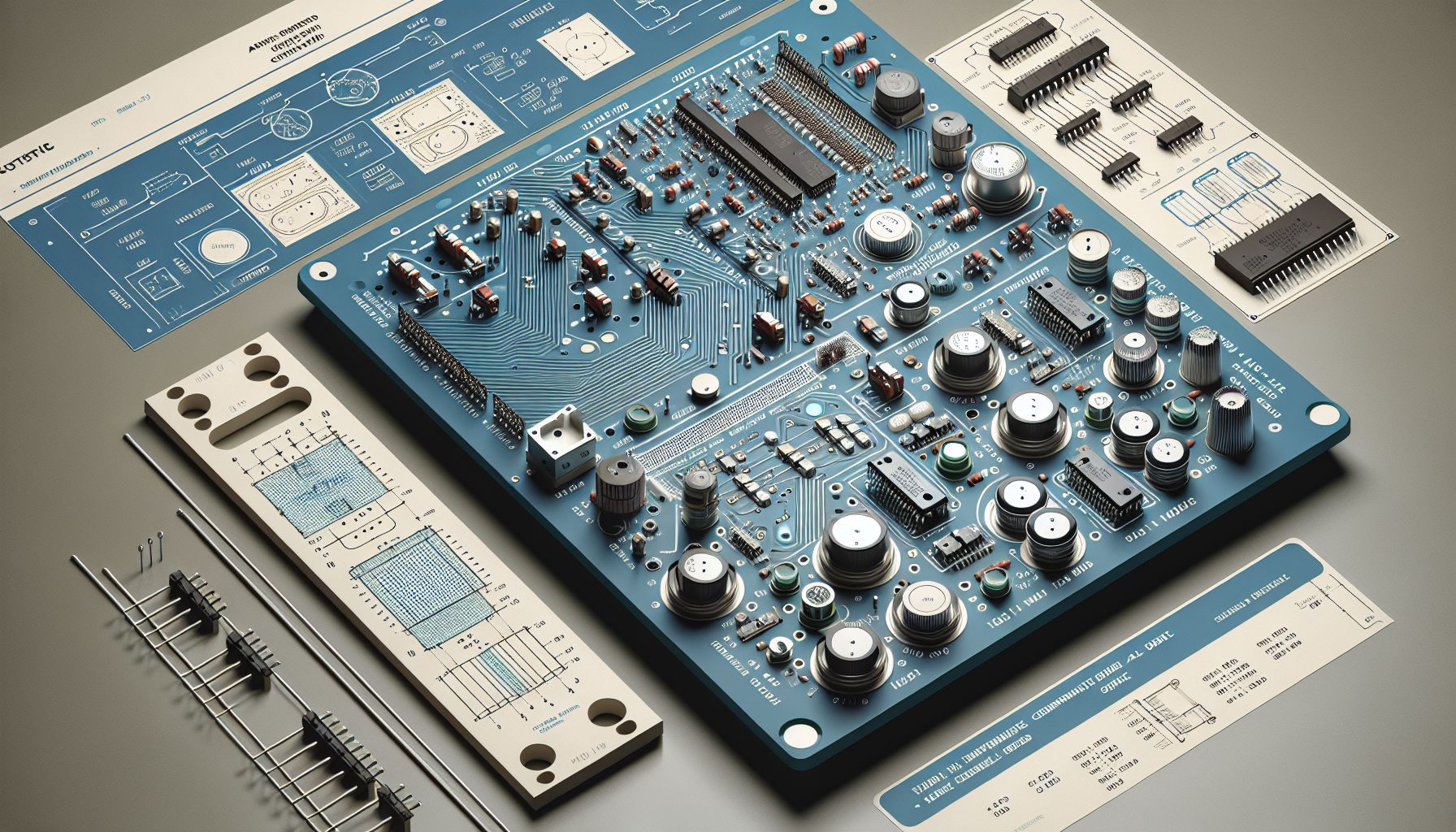
A fascinating journey into space history unfolds as researchers reverse-engineer a mysterious NASA test stand circuit board from the Apollo era. Using modern KiCad software, they’re decoding the 165.1 x 114.3 mm board’s precise functions, featuring specialized components like temperature-compensated Zener diodes and differential amplifiers. This rare glimpse into 1960s aerospace technology demonstrates how cutting-edge engineering solutions were implemented during humanity’s first steps into space.
Unveiling the Past with Modern Tools
The painstaking process of reverse engineering this Apollo-era printed circuit board (PCB) has offered a unique window into the technological prowess of the 1960s. The project, led by an enthusiast known as Skyhawkson, began with the acquisition of the PCB believed to have been used in a NASA test stand. High-quality photographs of the board were meticulously taken to trace the connections and components that had long been dormant. The dimensions of the board, approximately 165.1 mm by 114.3 mm, house an intricate design comprising 22 circuit edge connectors, 31 two-terminal parts including resistors and diodes, 3 trimmer potentiometers, and 7 transistors, all arranged in four orderly columns[1].
The Reverse Engineering Challenge
Skyhawkson embarked on creating an initial schematic using KiCad, a modern circuit design software, which mirrored the board’s geometry to verify the accuracy of the connection traces. This ‘dumb’ schematic served as the foundation for deeper analysis, revealing two independent circuits linked by a single signal—an arrangement that simplified yet intrigued the reverse engineers. The challenge lay not only in the physical reconstruction but also in identifying the purpose and function of each component, a task complicated by the dated nature of some parts and the absence of original documentation[2].
Decoding Historical Electronic Functions
Among the notable components identified were the R125, a 3W wirewound current sense resistor conforming to military specifications, and the 1N2625 Zener diode, known for its precision voltage reference capabilities. These components suggest the board’s potential role as a sensor interface card, likely designed for strain gauges and compatible with Wheatstone bridge configurations. Such configurations are pivotal in accurately reading sensor data, a necessity for controlling and monitoring various aerospace applications[3].
From Historical Artifact to Modern Blueprint
The reverse engineering effort not only sheds light on the historical applications of these components but also revitalizes them for contemporary use. By converting the old PCB designs into KiCad schematics, the project bridges the gap between vintage aerospace technology and modern electronics design practices. This conversion process highlights the enduring relevance of past innovations and provides a valuable learning platform for current and future generations of engineers. The schematics, now available on GitHub, invite enthusiasts worldwide to explore and possibly replicate the design, further extending the legacy of Apollo-era ingenuity[4].