NVIDIA and WEKA Join Forces to Transform AI Storage with Revolutionary Grace CPU
Santa Clara, Tuesday, 19 November 2024.
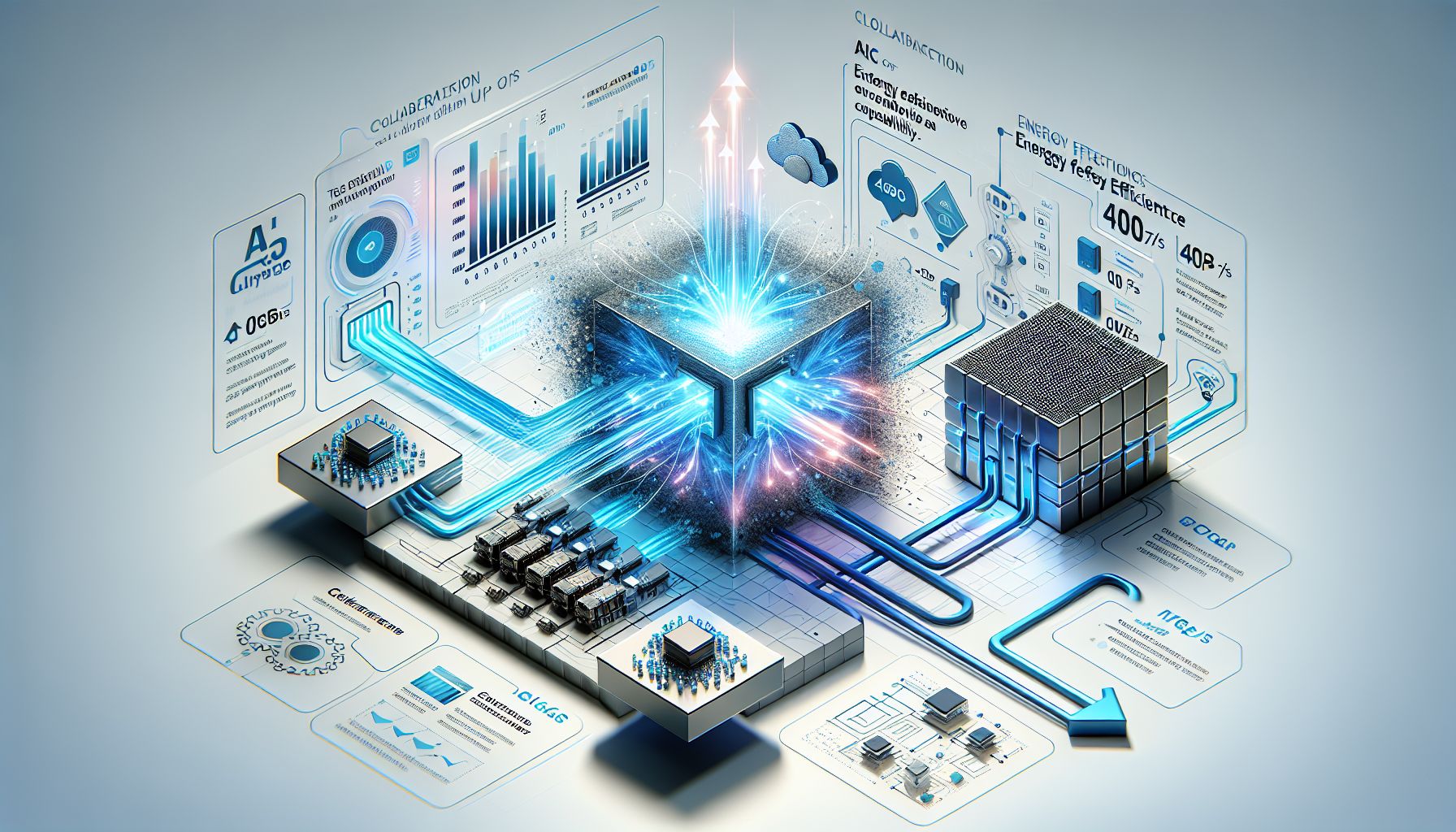
WEKA unveils groundbreaking AI storage technology powered by NVIDIA’s Grace CPU Superchip, promising 2x energy efficiency and up to 400 Gb/s network speeds. Set for early 2025 release, this innovation could slash data center carbon emissions by 260 tons per petabyte annually while delivering unprecedented AI processing capabilities.
Industry-Leading Performance and Efficiency
The collaboration between WEKA and NVIDIA marks a significant leap in AI storage technology. By leveraging NVIDIA’s Grace CPU Superchip, which boasts 144 Arm Neoverse V2 cores, this solution provides twice the energy efficiency compared to traditional x86 servers. This is a substantial advancement in addressing the power constraints that modern data centers face, especially as AI and high-performance computing (HPC) workloads demand faster data access and processing[1].
Revolutionizing Data Center Infrastructure
WEKA’s AI storage cluster integrates the NVIDIA ConnectX-7 NICs and BlueField-3 SuperNICs, delivering network connectivity speeds of up to 400 Gb/s. This ensures rapid data transfer and minimal latency, crucial for AI pipelines. The zero-copy software architecture further reduces I/O bottlenecks, enhancing the efficiency of AI and HPC workloads. This development aligns with industry needs for scalable, high-performance solutions that minimize both space and energy consumption in data centers[1].
Environmental Impact and Sustainability
A key highlight of this new AI storage solution is its potential environmental benefits. By optimizing energy use, it can prevent up to 260 tons of CO2 emissions per petabyte stored annually. This not only represents a technological leap but also a commitment to sustainability. As enterprises increasingly adopt AI, the demand for energy is expected to double by 2026, making such efficient solutions critical for reducing carbon footprints and operational costs[1].
Expert Opinions and Future Outlook
Industry leaders have recognized the significance of this innovation. Nilesh Patel, WEKA’s Chief Product Officer, emphasizes how this technology meets the burgeoning demand for generative AI applications and multi-modal data processing. Meanwhile, David Lecomber, Director for HPC at Arm, notes that AI advancements necessitate new approaches in silicon and system design to maintain energy efficiency and performance. The WEKA-NVIDIA solution is set to be commercially available in early 2025, promising to set new standards in AI infrastructure[1].