AI Revolution in Embedded Systems: From Cloud to Edge
Global, Wednesday, 16 October 2024.
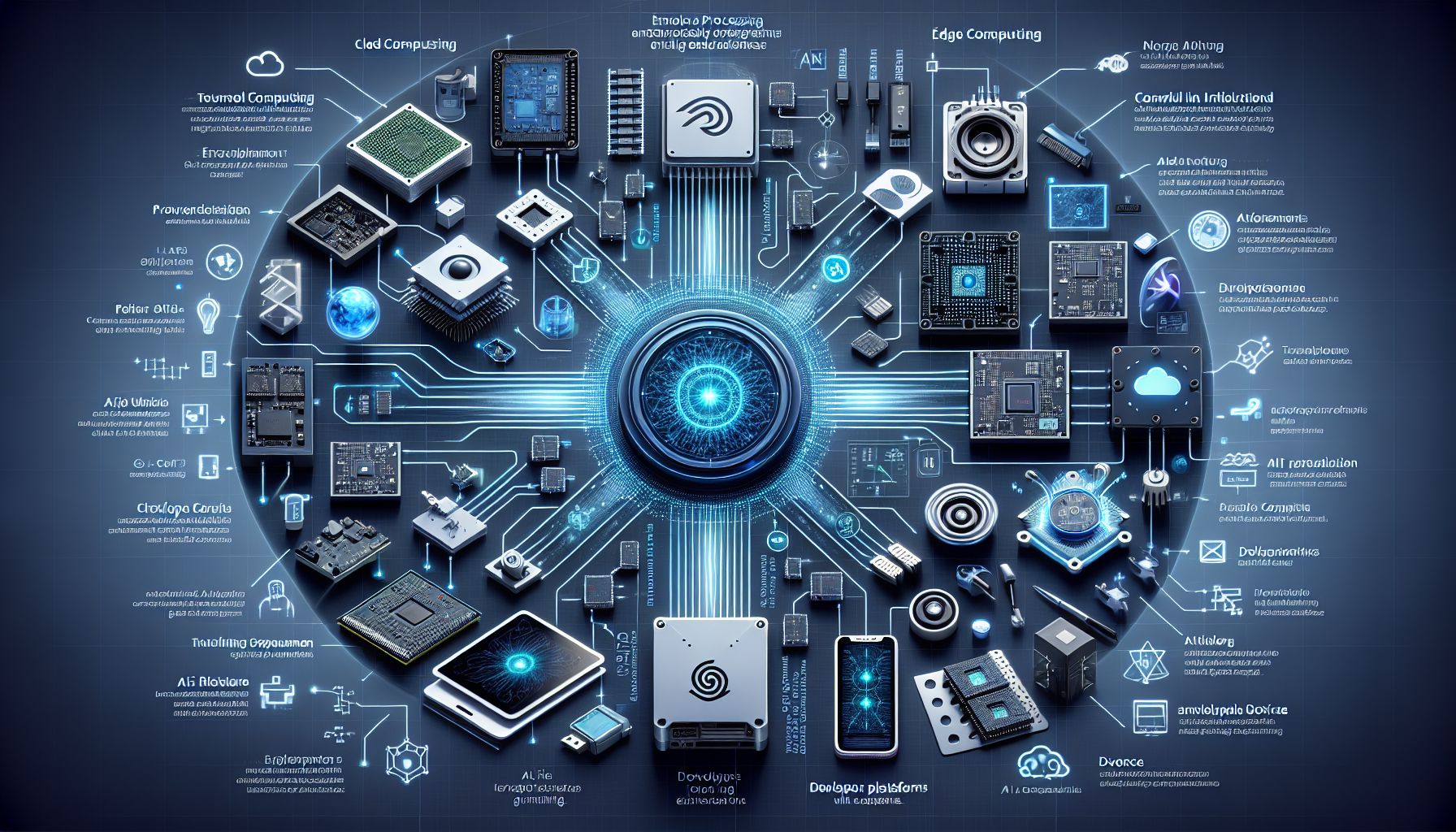
The integration of AI into embedded systems is transforming industries, enabling sophisticated tasks on compact devices. NVIDIA leads with powerful GPUs and AI-specific hardware, while developer platforms facilitate AI simulation without specialized equipment. Neural Processing Units (NPUs) optimize AI tasks in smartphones and IoT devices, enhancing efficiency and battery life. This shift towards edge AI processing is revolutionizing sectors from automotive to healthcare.
Emergence of AI in Embedded Systems
The integration of artificial intelligence (AI) into embedded systems marks a significant shift in the technology landscape. By embedding AI capabilities within smaller devices, industries can now perform complex tasks traditionally reliant on high-performance computing. NVIDIA, a key player in this transformation, leverages its powerful GPUs and AI-specific hardware to lead advancements in this field. This development allows tasks such as image recognition and natural language processing to be executed efficiently on mobile devices and IoT sensors, reducing the need for constant cloud connectivity[1].
The Role of Developer Platforms
Developer platforms are crucial in facilitating AI integration into embedded systems. These platforms provide the necessary tools and ecosystems, enabling developers to simulate AI applications without the need for specialized hardware. Cloud-based services from giants like AWS, Google Cloud, and Microsoft Azure offer infrastructure that supports pre-trained models, making AI development more accessible[1]. This ease of access accelerates the deployment of AI models, especially in sectors like autonomous vehicles and smart cities, where real-time processing is crucial.
Neural Processing Units and Edge AI
Neural Processing Units (NPUs) are pivotal in this AI revolution. They optimize AI and machine learning tasks, providing faster data processing and reduced power consumption. NPUs are integrated into a range of devices, from smartphones to IoT sensors, allowing real-time AI processing without draining battery life. This evolution supports applications such as augmented reality and voice recognition, enhancing user experiences while conserving energy. Furthermore, the shift towards edge AI processing reduces dependency on cloud servers, improving latency and privacy[2][3].
Implications Across Industries
The AI integration into embedded systems is having profound implications across various industries. In automotive, AI enhances autonomous driving capabilities, while in healthcare, it enables smart diagnostics and monitoring. Industrial automation benefits from predictive maintenance and process optimization, thanks to AI’s ability to analyze vast data sets efficiently. These trends underscore the growing importance of AI in improving operational efficiency, safety, and user experience across different sectors[4][5].
Challenges and Future Directions
Despite the promising advancements, the embedded systems industry faces challenges such as cybersecurity threats and the need for standardization across AI applications. As more devices become interconnected, the risk of cyber attacks increases, necessitating robust security measures. Additionally, fragmentation among suppliers poses a challenge, with a need for unified frameworks to support AI integration seamlessly. However, the opportunities presented by these trends, such as enhanced real-time processing and efficiency, outweigh the risks, marking a promising future for AI in embedded systems[6].
Bronnen
- electronics-sourcing.com
- www.vdcresearch.com
- www.emertxe.com
- www.embedded.com
- futuremarketinsights.com
- www.eetimes.eu