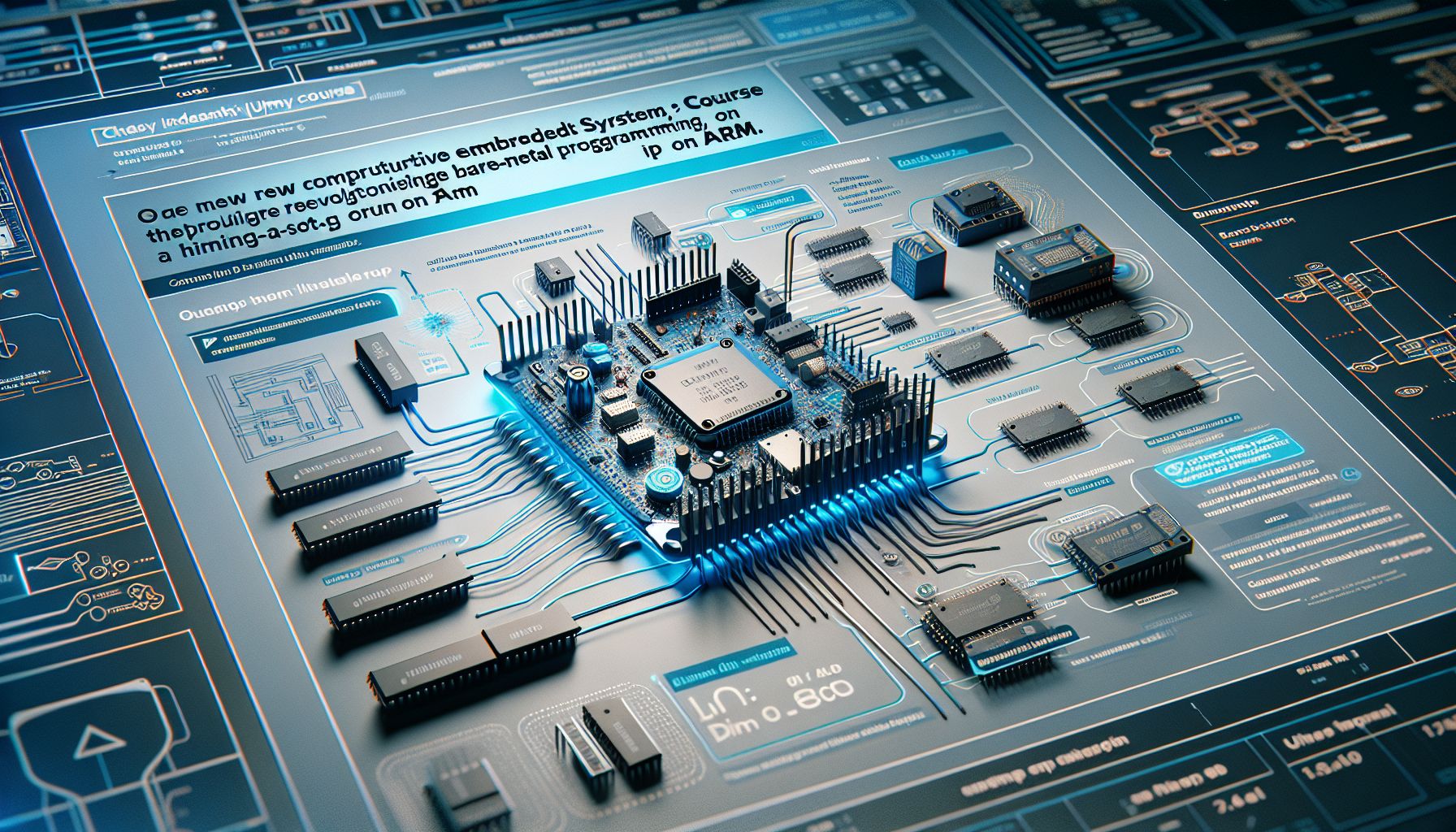
New Embedded Systems Course Revolutionizes Bare-Metal Programming on ARM
San Francisco, Friday, 22 November 2024.
A comprehensive Udemy course with over 8,000 students is transforming how developers learn bare-metal programming. The course uniquely teaches STM32 microcontroller programming without libraries, focusing on direct register manipulation and CMSIS standards, earning praise from industry veterans including a 30-year semiconductor engineer.
Understanding Bare-Metal Programming
Bare-metal programming refers to a low-level programming approach where software is written to directly interact with the hardware of a microcontroller without the abstraction layers provided by operating systems or libraries. This method is crucial for applications demanding high performance and precise control over hardware resources. By focusing on direct register manipulation, developers gain an intimate understanding of the hardware architecture, which is essential for optimizing embedded systems.
Course Highlights and Practical Applications
The Udemy course on bare-metal programming, specifically for ARM-based microcontrollers such as the STM32, emphasizes a hands-on approach. Students learn to develop firmware by navigating microcontroller reference manuals and datasheets, constructing peripheral drivers from scratch. This practical experience is invaluable for professionals aiming to work in fields like automotive systems, robotics, and industrial automation, where custom firmware solutions are often required. The course’s focus on CMSIS (Cortex Microcontroller Software Interface Standard) ensures that learners are equipped with industry-relevant skills that can be directly applied to real-world projects.
Student Feedback and Industry Reception
Feedback from students and industry professionals highlights the course’s effectiveness. A semiconductor chipset application engineer with three decades of experience noted the depth of understanding imparted by the course, underscoring its impact on embedded product design. The structured learning path has been praised for its logical sequence, making complex concepts accessible to beginners while still offering depth for experienced programmers. Such endorsements speak volumes about the course’s ability to bridge educational gaps in embedded firmware development.
Expanding Career Opportunities
The skills acquired from mastering bare-metal programming are highly sought after in the job market. Roles such as embedded software engineers and firmware developers often require proficiency in ARM microcontrollers and bare-metal programming techniques. Companies like Ananant Systems and AMD are actively seeking professionals with these capabilities, emphasizing the relevance of such expertise in developing cutting-edge technologies and secure firmware solutions for data center GPUs and other advanced computing applications[1][2].
Continued Learning and Development
For those looking to further enhance their skills, resources like the Hubris firmware platform, which utilizes Rust for embedded development, offer opportunities to explore new programming paradigms. Hubris’s unique approach to task isolation and memory management can complement the foundational skills gained in the Udemy course, providing a broader perspective on embedded systems programming[3].