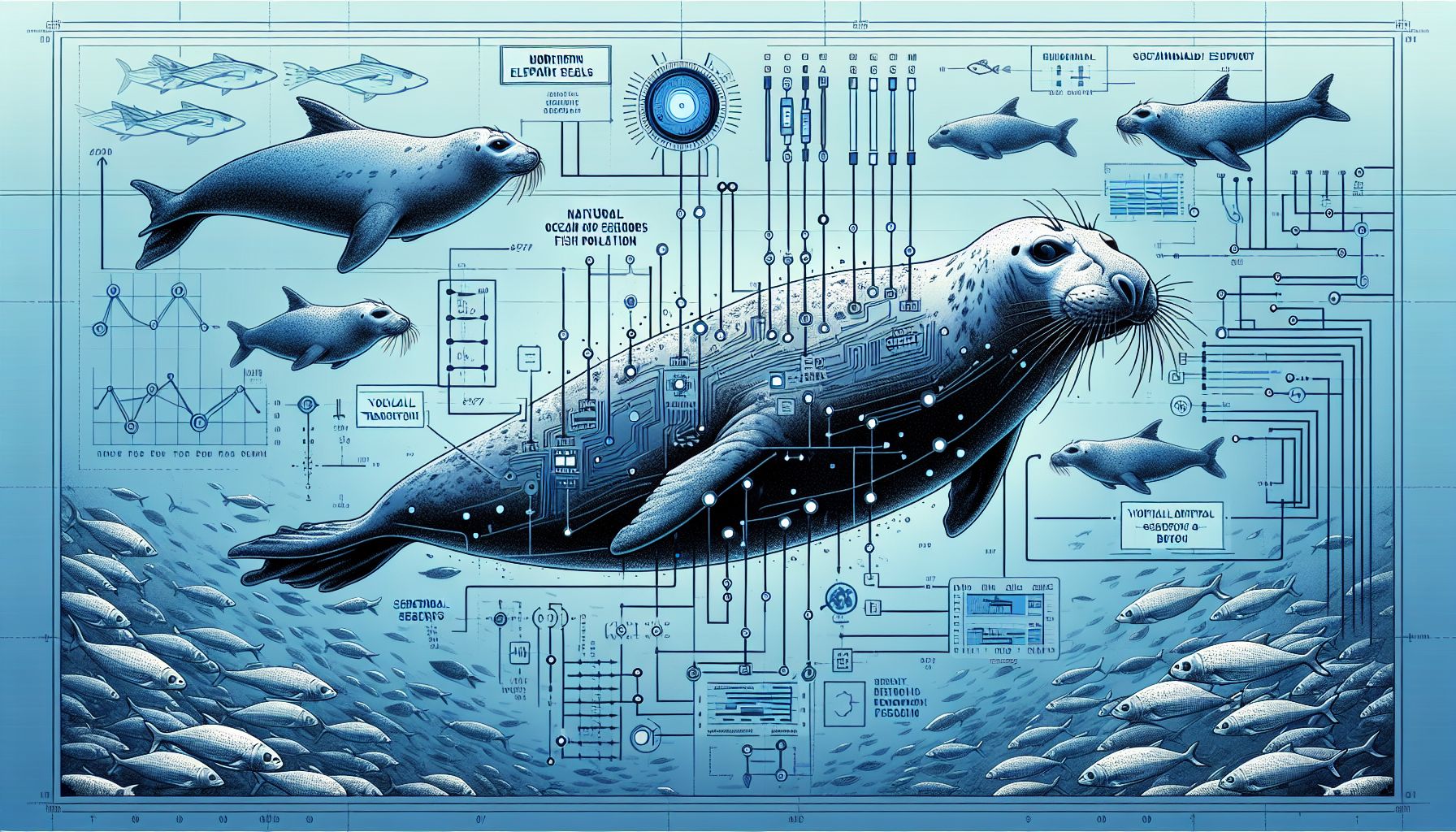
Elephant Seals as Natural Ocean Sensors to Monitor Fish Populations
Santa Cruz, Monday, 17 February 2025.
UC Santa Cruz researchers found northern elephant seals can aid in monitoring fish populations by acting as smart sensors, providing insights crucial for sustainable fishing and conservation.
Groundbreaking Research in Marine Biology
In a pioneering study published on February 14, 2025, in Science magazine, UC Santa Cruz marine biologist Roxanne Beltran and her team demonstrated how northern elephant seals can serve as sophisticated biological monitoring tools [1][2]. The research, building upon six decades of seal observation data comprising over 350,000 observations of more than 50,000 seals at the Año Nuevo Natural Reserve [1][2], represents a significant breakthrough in marine ecology monitoring techniques.
Exploring the Ocean’s Twilight Zone
The study focuses on the ocean’s ‘twilight zone’ - a critical layer between 200 and 1,000 meters below sea level where sunlight barely penetrates [1][2]. This zone, which contains the majority of the planet’s fish biomass, has historically been challenging to monitor with conventional tools. Traditional monitoring methods using ships and floating buoys can only measure a small fraction of the ocean, while satellites cannot penetrate beneath the surface [1][2]. The elephant seals’ natural diving behavior makes them ideal for monitoring this otherwise inaccessible region.
Implications for Sustainable Fishing
This innovative approach comes at a crucial time as humanity considers harvesting fish populations from the twilight zone to meet increasing protein demands [1]. The research, conducted at the Beltran Lab within UC Santa Cruz’s Ecology and Evolutionary Biology Department [4], combines biologging data from instrumented seals with environmental observations to understand ecological patterns [4]. These findings could prove instrumental in developing sustainable fishing practices and protecting marine ecosystems.
Future Applications and Conservation
The potential applications of this research extend beyond just monitoring fish populations. Recent studies from UC Santa Cruz have already identified several marine species as vulnerable to climate change impacts [7], making this new monitoring technique particularly valuable. Dr. Beltran, who was recently honored by the Explorer Society for promoting science and education equity [7], continues to lead efforts in transformative marine research that could help protect ocean ecosystems for future generations.