Huawei's Xinghe AI Campus Solution Advances Campus Security
Shanghai, Tuesday, 23 September 2025.
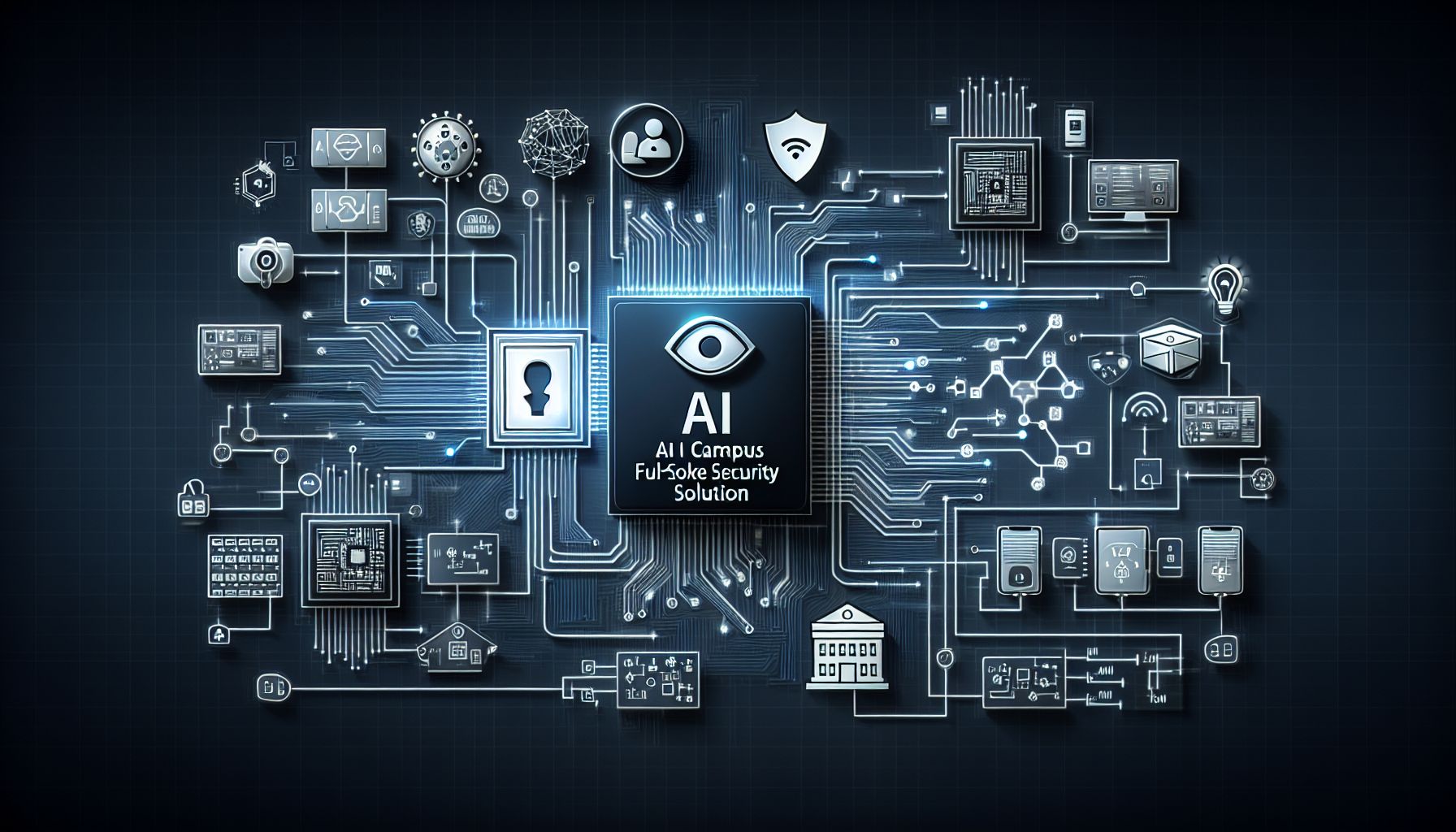
Huawei launched its Xinghe AI Campus Full-Scope Security solution at HUAWEI CONNECT 2025, enhancing campus safety with AI technology, including surveillance, threat detection, and privacy-sensitive monitoring.
Innovative Features of the Xinghe AI Campus Solution
Huawei’s Xinghe AI Campus Full-Scope Security solution, unveiled at HUAWEI CONNECT 2025, integrates cutting-edge AI technologies to create a robust security framework. The solution is comprehensive, covering various facets such as asset security, transmission security, and spatial security. For asset security, the solution offers 100% terminal identification and AI-powered detection of abnormal behaviors within 30 seconds, with automatic control within 1 second [1]. Transmission security is bolstered by Huawei’s Wi-Fi Shield technology, which uses AI-driven signal encryption to prevent eavesdropping, alongside end-to-end MACsec encryption and post-quantum cryptography for wired networks [1][2]. Spatial security employs wireless access points with Channel State Information (CSI) sensors and AI algorithms, allowing for precise human presence detection without cameras, thereby ensuring privacy in sensitive areas [1][2].
Implications for Campus Security and the European Electronics Sector
The introduction of the Xinghe AI Campus solution is poised to significantly impact the way educational institutions and corporate campuses approach security. By extending protections from the digital sphere into the physical realm, Huawei sets a precedent in AI-driven security solutions [1][2]. The European electronics sector, where security solutions are becoming increasingly integral, may see extensive adoption of such technologies. As campuses across Europe face rising security challenges, the integration of AI to address these issues offers a promising avenue for enhanced protection measures. This move aligns with broader trends in the electronics industry, which is increasingly leaning towards AI to solve complex problems [GPT].
Expert Opinions and Market Trends
Shawn Zhao, President of the Campus Network Domain at Huawei’s Data Communication Product Line, emphasized the necessity of securing campus networks, stating, ‘Securing campus networks is no longer optional, it is essential. Huawei remains committed to continuous innovation, empowering intelligent networks, and redefining campus security in the AI era’ [1][2]. The solution’s adoption by over 100 government and financial institutions worldwide underscores its relevance and potential market demand [1]. With AI technologies at the forefront, the market for security solutions in Europe is expected to expand, driven by the need for innovative measures that address both digital and physical threats [GPT].
Future Prospects and Actionable Insights
Decision-makers in the European electronics sector can draw several actionable insights from Huawei’s latest advancements. The emphasis on AI in security solutions suggests a future where intelligent systems are central to safety management. As organizations look to enhance their security protocols, the adoption of AI-driven solutions like Huawei’s Xinghe AI Campus can provide a competitive edge. Furthermore, the focus on privacy-sensitive monitoring and AI-powered threat detection can serve as a model for developing comprehensive security frameworks across various sectors. As the landscape of security continues to evolve, staying ahead of technological advancements will be crucial for maintaining robust protection measures [1][2].