Texas A&M Pioneers Virtual Reality in Electrical Engineering Education
College Station, Thursday, 10 October 2024.
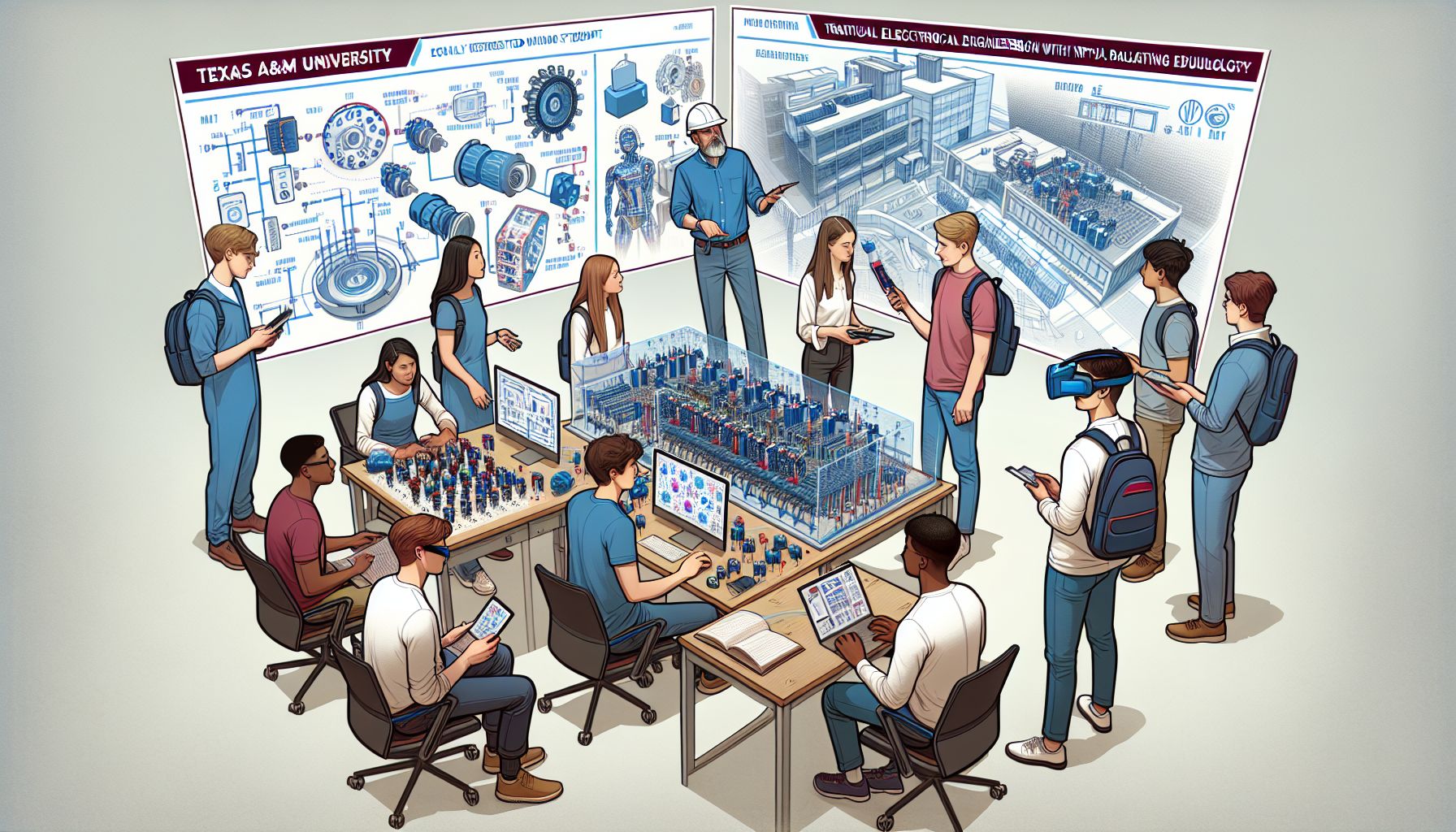
Texas A&M University is revolutionizing electrical engineering education by integrating virtual reality technology. This innovative approach aims to provide students with flexible learning options, enhanced accountability, and increased mobility, aligning with evolving industry demands and preparing future engineers for a rapidly changing technological landscape.
Virtual Reality: A Catalyst for Modern Education
Virtual reality (VR) is transforming educational frameworks, particularly in fields that demand a concrete understanding of complex systems, such as electrical engineering. At Texas A&M University, the incorporation of VR into the curriculum marks a significant leap toward immersive learning environments. By utilizing VR, students can interact with intricate electrical systems in a virtual setting, gaining practical experience without the constraints of physical laboratories. This approach not only enhances learning flexibility but also ensures that students are well-versed in industry-relevant skills, preparing them to meet the challenges of modern engineering landscapes.
Bridging the Gap Between Theory and Practice
One of the key benefits of VR in education is its ability to bridge the gap between theoretical knowledge and practical application. In electrical engineering, understanding the intricate workings of components like transformers is crucial. VR platforms allow students to explore detailed models, such as step-down transformers, where they can identify parts, understand their function, and observe their operation holistically. This hands-on experience is invaluable, providing insights that traditional textbooks and lectures cannot offer. By simulating real-world environments, VR ensures that students are not only learning but also applying their knowledge in realistic scenarios.
Expanding Educational Horizons
The global trend towards digitization and online education has catalyzed the adoption of VR in academic institutions. According to industry reports, the market for virtual reality in education is projected to grow significantly, with expectations to reach $13,098.2 million by 2026, driven by a compound annual growth rate (CAGR) of 42.9%[1]. This growth is fueled by the need for innovative educational tools that provide equal learning opportunities for both remote and on-site students. VR labs at Texas A&M offer a safe and updated learning environment where students can conduct experiments and access cutting-edge resources, leveling the playing field for all learners.
Real-World Applications and Future Prospects
The integration of VR in engineering education extends beyond the classroom. It prepares students for real-world applications, where they can utilize VR to visualize complex data, enhance problem-solving skills, and collaborate on projects regardless of geographic location. As industries increasingly rely on advanced technologies, such as IoT and AI, the demand for engineers proficient in these tools is on the rise. By incorporating VR into its curriculum, Texas A&M is not only responding to current educational needs but also paving the way for future-ready engineers who can thrive in an Industry 4.0 environment.