RISC-V Summit Showcases Next-Gen Processor Innovations
San Jose, Monday, 28 October 2024.
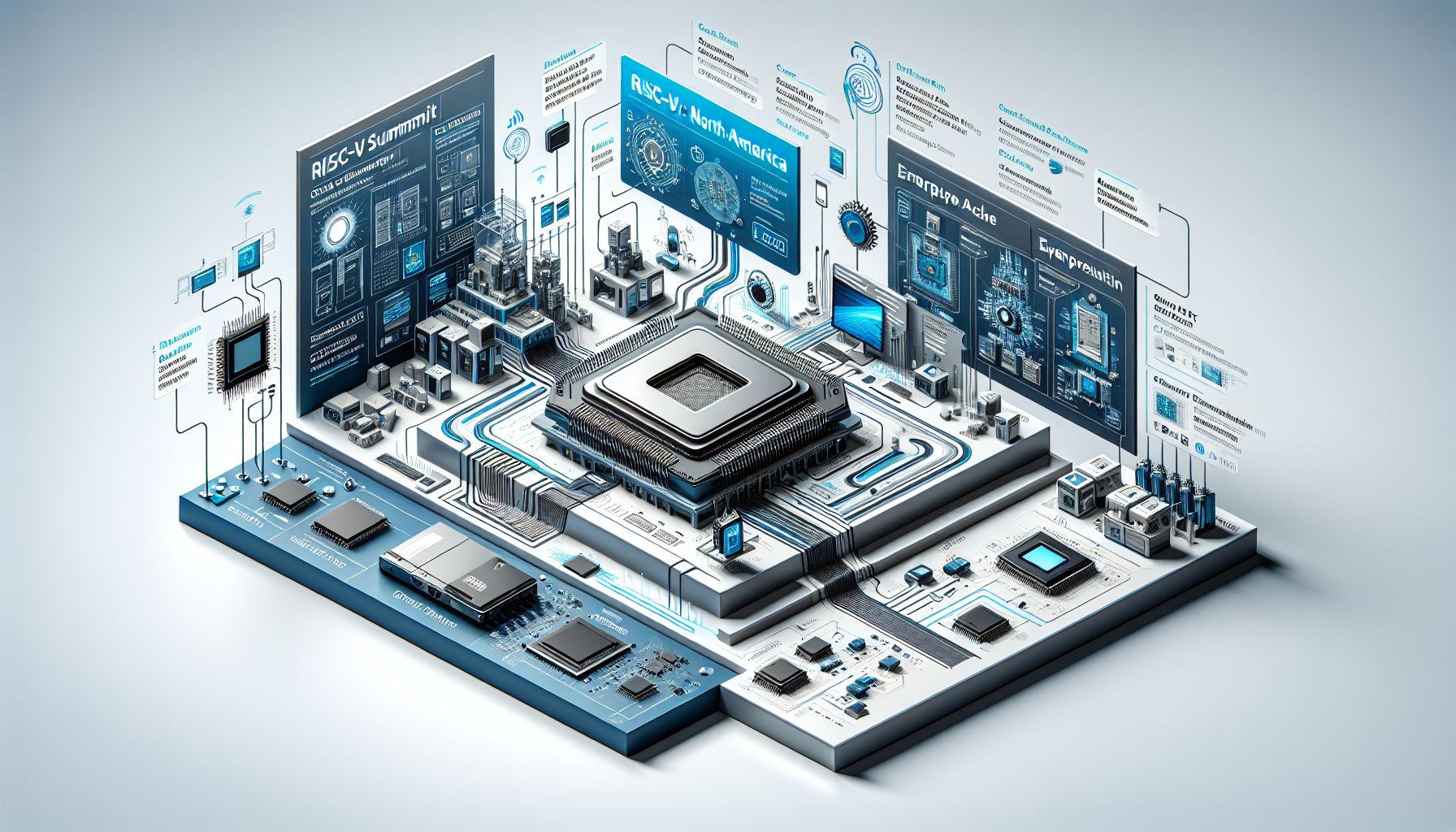
The RISC-V Summit North America 2024 unveiled groundbreaking advancements in open-standard processor architecture. From automotive safety chips to enterprise-grade profiles, the event highlighted RISC-V’s growing impact across industries, promising enhanced flexibility and cost-effectiveness in computing applications.
Advancements in Automotive and Safety Applications
At the forefront of the summit was Andes Technology’s introduction of the AndesCore D45-SE, a 32-bit RISC-V processor specifically designed to meet ISO 26262 ASIL-D certification standards for automotive safety. This processor is engineered for critical automotive applications such as millimeter-wave radar sensors and infotainment DCUs, incorporating safety features like ECC memory error correction and hardware stack protection. These innovations ensure that RISC-V continues to play a pivotal role in enhancing the safety and reliability of automotive systems[1].
Enterprise and Cloud Computing Enhancements
RISC-V International announced the ratification of the RVA23 profile, a 64-bit RISC-V implementation that enhances compatibility and software portability across various RISC-V implementations. This profile includes vector extensions for math-intensive workloads commonly seen in AI/ML, cryptography, and enterprise hardware systems. Additionally, it introduces a hypervisor extension for virtualization, crucial for enterprise and cloud computing environments. These advancements underscore RISC-V’s potential to disrupt markets traditionally dominated by proprietary architectures such as x86 and ARM[1][2].
Security Innovations and Collaborations
Security was a major theme at the summit, with Codasip donating its CHERI software development kit (SDK) to the CHERI Alliance. This initiative aims to mitigate vulnerabilities associated with C language pointers, which are responsible for approximately 70% of cyber-attacks. The CHERI architecture, developed through a collaboration between Cambridge University and SRI International, enhances RISC-V’s security capabilities by isolating and replacing vulnerable pointers, thereby fortifying the architecture against potential threats[1][3].
Global Impact and Industry Adoption
The RISC-V Summit highlighted the architecture’s global reach and adoption across various sectors. With more than 13 billion RISC-V cores shipped globally, the technology is impacting industries such as AI/ML, wireless, automotive, data centers, space, IoT, and embedded systems. Major companies like Nvidia, Google, and Qualcomm have reaffirmed their commitment to RISC-V, leveraging its open-standard architecture to drive innovation. As the technology continues to evolve, RISC-V is poised to challenge traditional architectures, offering a flexible, cost-effective alternative that fosters global technological advancement[2][4].