Revolutionary Wireless Tech Could Double EV Battery Efficiency
Netherlands, Friday, 22 November 2024.
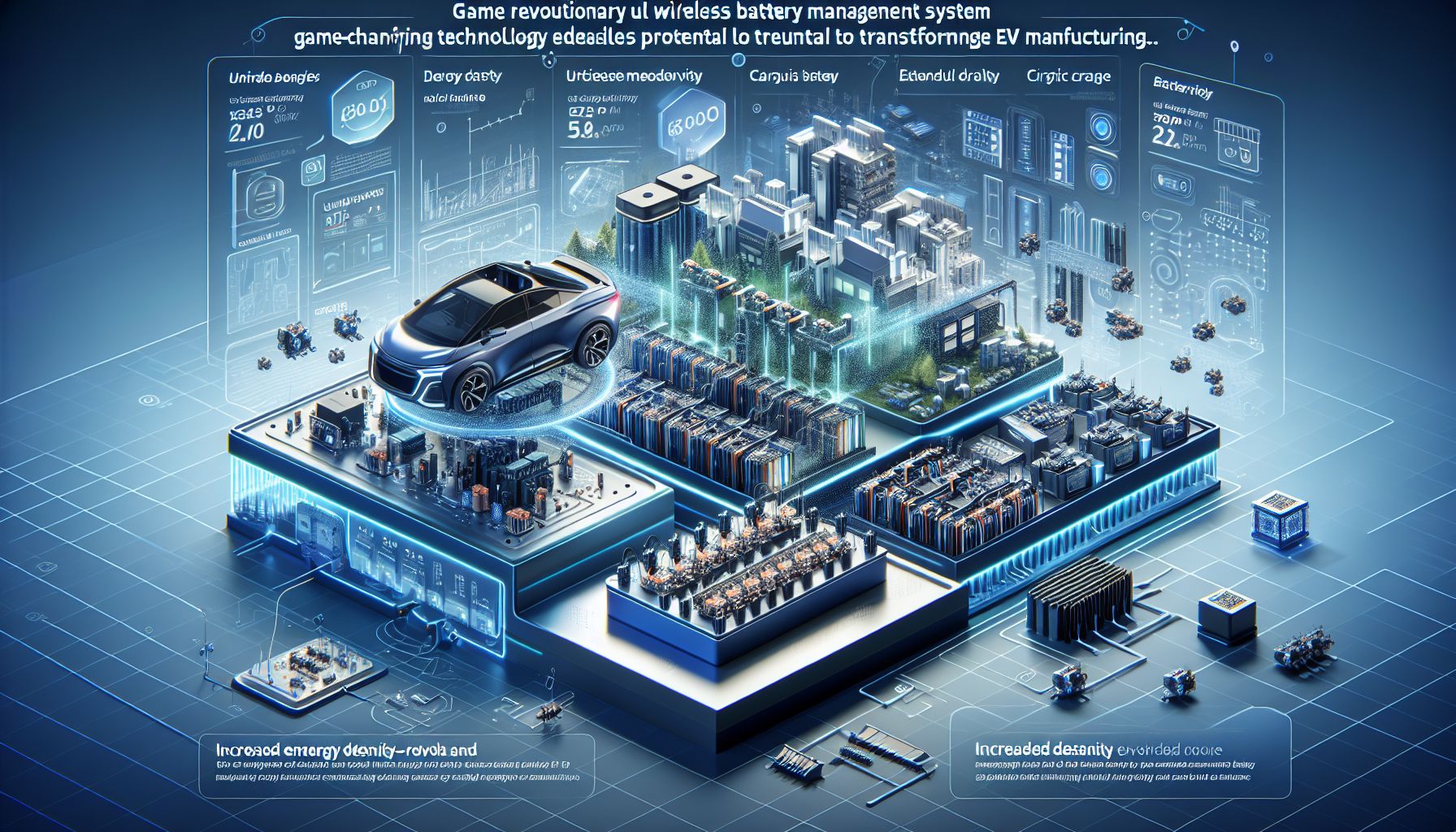
NXP Semiconductors unveils groundbreaking Ultra-Wideband wireless battery management system, eliminating complex wiring in EV batteries. This industry-first innovation promises increased energy density, extended vehicle range, and simplified assembly processes, potentially transforming EV manufacturing when it launches in Q2 2025.
Understanding Ultra-Wideband Technology
Ultra-Wideband (UWB) technology is at the heart of this breakthrough in electric vehicle (EV) battery management systems. Unlike conventional narrow-band technologies such as Bluetooth Low Energy, UWB operates with high-bandwidth pulses, offering superior resistance to reflections and frequency-selective fading. This ensures more reliable data transmission within the battery pack, a critical factor in maintaining battery health and efficiency[1][2].
Key Advantages of UWB Wireless BMS
The UWB wireless battery management system (BMS) developed by NXP Semiconductors introduces several advancements. By eliminating the need for complex wiring harnesses, it simplifies the assembly of EVs and reduces production errors. This not only cuts manufacturing costs but also enhances the energy density of battery packs, allowing for more compact designs and extended vehicle range. Furthermore, the system supports scalable and reusable designs, enabling manufacturers to apply a single architecture across various platforms, thereby accelerating the development process[3][4].
Implications for the EV Industry
The introduction of NXP’s UWB BMS is poised to revolutionize the EV industry by addressing several challenges associated with traditional wired systems. The enhanced energy density and simplified assembly processes facilitated by the UWB technology could significantly reduce the time-to-market for new EV models. Moreover, the increased reliability and safety of wireless communication within battery packs may lead to longer battery lifespans and lower maintenance costs for consumers. As a result, this innovation not only benefits manufacturers but also enhances the overall user experience for EV owners[5].
Expert Insights and Market Impact
According to Naomi Smit, General Manager and VP of Battery Management Systems at NXP, their wireless BMS solution offers EV manufacturers the most advanced technology to power the vehicles of tomorrow. By leveraging NXP’s FlexCom chipset, which supports both wired and wireless configurations, manufacturers gain flexibility in vehicle architecture, reducing development costs and increasing efficiency. The market launch slated for Q2 2025 will enable original equipment manufacturers (OEMs) to evaluate and integrate this technology, potentially positioning NXP as a leader in the automotive semiconductor sector[6][7].
Future Prospects and Conclusion
As the automotive industry continues to shift towards electrification, innovations like NXP’s UWB wireless BMS are crucial for maintaining momentum. By streamlining production and enhancing battery performance, this technology could play a pivotal role in accelerating the adoption of electric vehicles globally. As NXP prepares for the commercial rollout of their solution, industry stakeholders will be keenly observing its impact on EV manufacturing and market dynamics. With its potential to double battery efficiency and transform assembly processes, NXP’s UWB BMS marks a significant leap forward in automotive technology[8].
Bronnen
- www.allaboutcircuits.com
- www.nxp.com
- chargedevs.com
- www.electrive.com
- www.researchgate.net
- www.stocktitan.net