Miniaturization of Electronics with Ceramic Packages
Global, Monday, 30 December 2024.
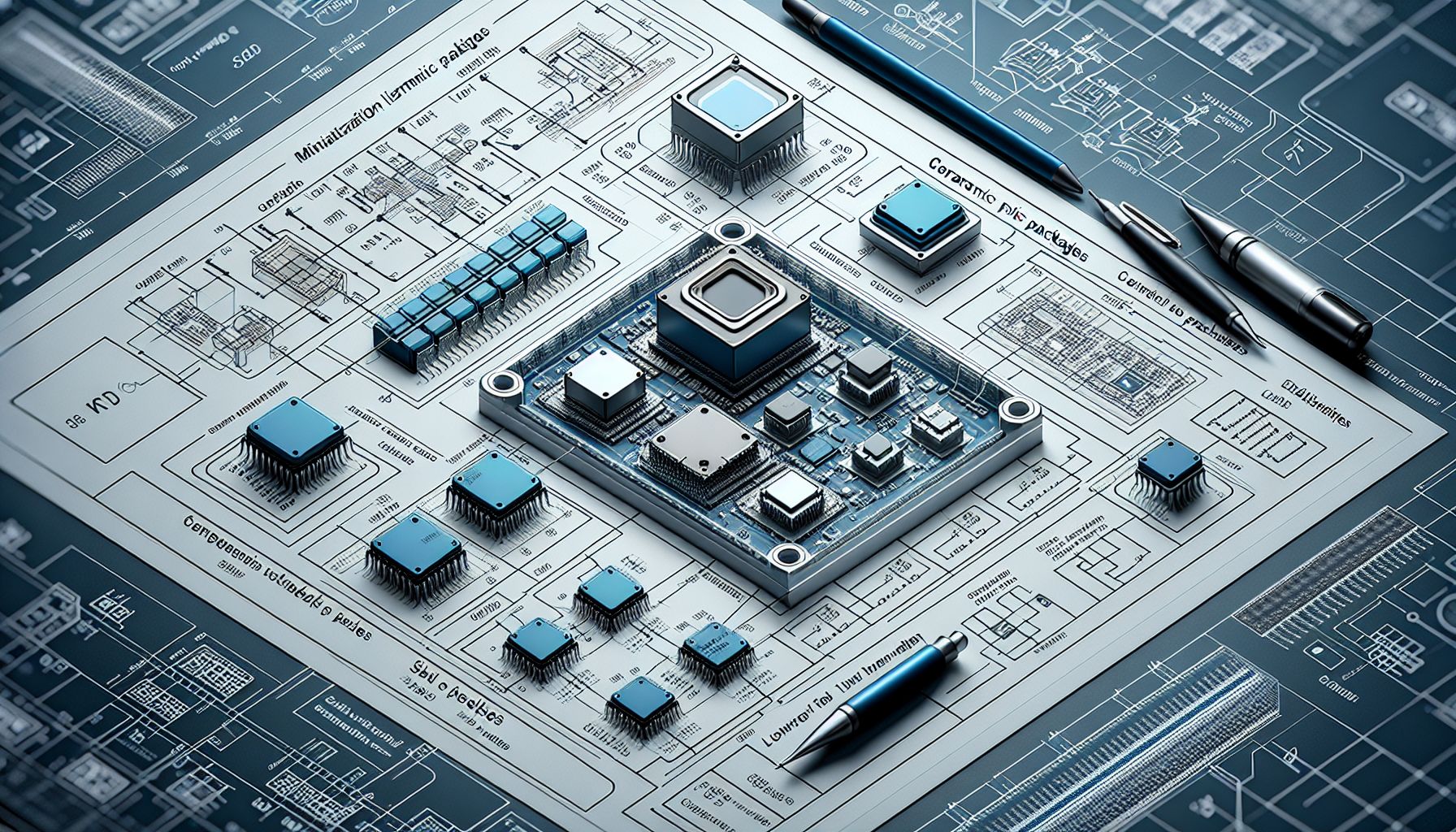
Recent innovations in low-profile ceramic packages enhance compactness and efficiency, meeting demands for smaller electronic components, especially in automotive and mobile industries.
Latest Advancements in Ceramic Package Technology
As of late 2024, significant progress has been made in ultra-miniature ceramic packages, with dimensions reaching as small as 2.05×1.65×0.45 mm [1][2]. These packages demonstrate remarkable thermal resilience, operating across temperatures from -40°C to +150°C [1], making them particularly suitable for demanding automotive applications. The advancement represents a crucial step in component miniaturization, especially for crystal units that serve as passive components utilizing piezoelectric effects [1].
Integration and Applications
The versatility of these ceramic packages extends across multiple sectors. They are being implemented in various electronic devices, from consumer electronics like laptops and gaming equipment to critical automotive safety and infotainment systems [1][2]. A notable development is their integration with MEMS (Micro Electro Mechanical Systems) technology, which combines mechanical parts, sensors, actuators, and electronic circuits on various substrates [3]. This integration is particularly evident in emerging mobility solutions, as demonstrated by recent innovations in flight control units utilizing MEMS 6DoF sensors [4].
Historical Context and Future Implications
The evolution of these miniaturized components builds upon the foundation laid by integrated circuit technology, which revolutionized electronics since its invention in 1958 [5]. Today’s ceramic packages represent a continuation of this miniaturization trend, with modern implementations focusing on enhanced functionality within increasingly compact forms. The industry is witnessing particular advancement in RF technology, as evidenced by recent developments in millimeter wave applications, where new surface mount packages are enabling unprecedented levels of integration [6].
Manufacturing and Implementation Considerations
Production efficiency has been optimized with these new ceramic packages, featuring standardized reel quantities of 3,000 to 15,000 units per package, each weighing just 6.30 mg [1]. This standardization facilitates mass production while maintaining precise quality control. The packages’ reflow compatibility enhances their practical implementation in various electronic devices [2], making them particularly valuable for automotive electronics manufacturers seeking reliable, space-efficient solutions.
Bronnen
- ele.kyocera.com
- ele.kyocera.com
- www.dotbglobal.com
- www.murata.com
- www.britannica.com
- www.everythingrf.com