Raspberry Pi Desktop Systems: Advanced Configurations for DIY Enthusiasts
San Jose, Tuesday, 22 October 2024.
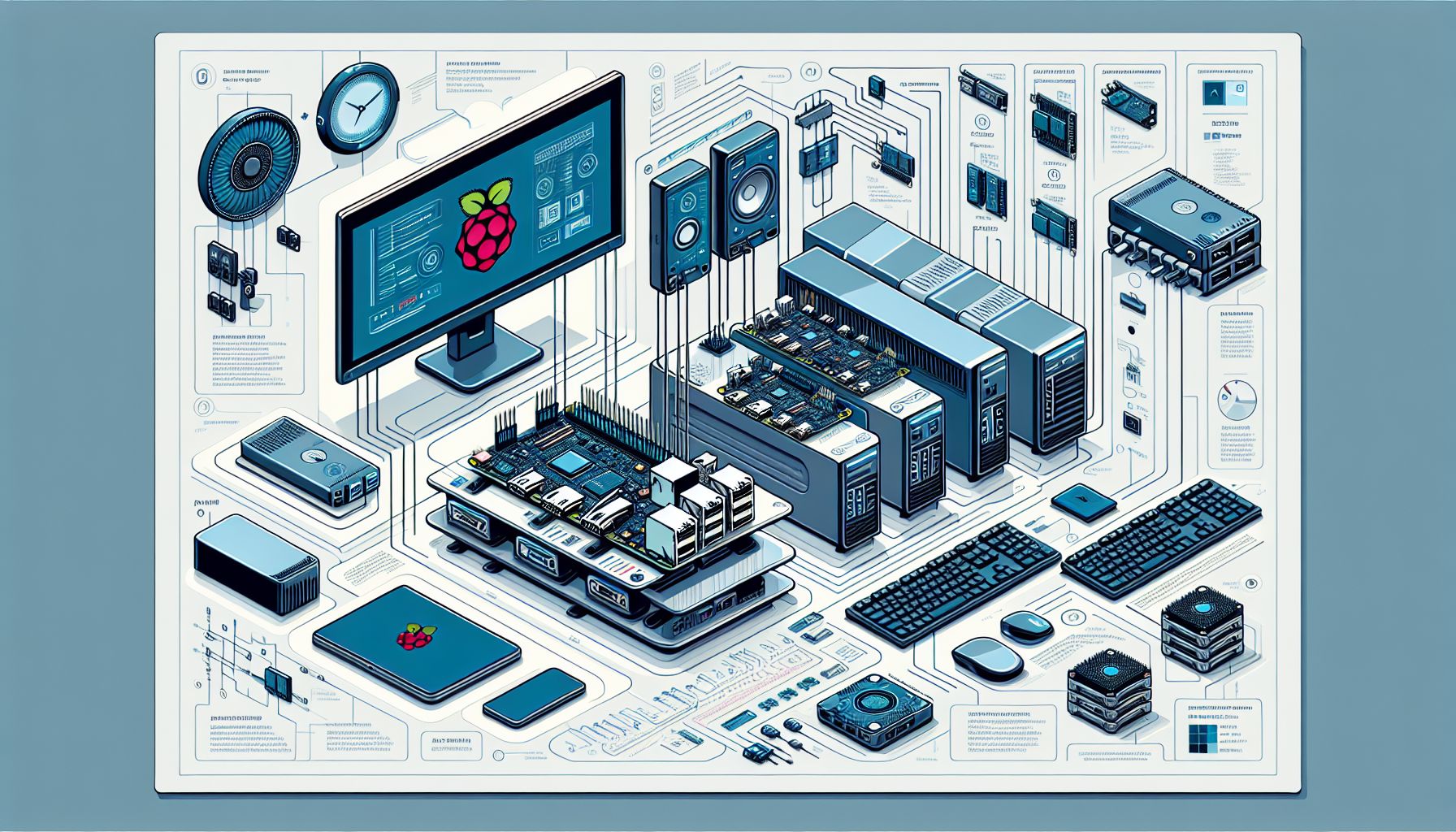
Raspberry Pi PC desktops and all-in-one computers with Quad Core processors and substantial RAM are now available, catering to home office setups and diverse computing needs. These advanced configurations offer powerful options for DIY enthusiasts and professionals alike.
Features and Performance
The latest Raspberry Pi desktop systems feature Quad Core processors and significant RAM capacity, providing a robust platform for various computing tasks. These systems are equipped with the ARM Cortex-A76 processor, which operates at 2.4 GHz, and a VideoCore VII GPU, enhancing both CPU and graphics performance. With RAM options ranging from 2 GB to 8 GB, users can select a configuration that best suits their needs, whether for basic computing or more demanding applications like programming and media editing[1][4].
Comparative Analysis
Compared to traditional desktop PCs, Raspberry Pi desktops offer a compact and energy-efficient alternative. Traditional PCs, such as those running on Windows 10, are known to consume up to 100 watts per hour[3]. In contrast, Raspberry Pi systems significantly reduce energy consumption, with some configurations using as little as 8.322 kg of CO2 annually[4]. This makes them an attractive option for environmentally conscious users and businesses aiming for sustainability. Moreover, the cost of Raspberry Pi solutions can be as low as £140, offering a cost-effective option compared to the potential high costs of replacing outdated PCs[4].
Pros and Cons
One of the main advantages of Raspberry Pi desktops is their versatility and affordability. They are ideal for DIY enthusiasts who enjoy customizing their systems for specific projects, such as home automation or educational purposes[4]. However, some challenges exist, such as limited availability of certain models in specific regions, like the Raspberry Pi 5 in India, due to compatibility issues with power adapters[2]. Additionally, while they offer substantial computing power for their size, they may not match the performance levels of high-end traditional desktops in resource-intensive tasks[5].
Use Cases and Recommendations
Raspberry Pi desktops are suitable for a wide range of users. For home office setups, they provide an efficient and compact solution for everyday tasks like web browsing, document editing, and media streaming. Educational institutions can utilize them for teaching computer science fundamentals, benefiting from their low cost and ease of use[6]. Professionals in fields such as software development can harness the power of these systems for coding and testing applications, especially in IoT and edge computing projects[6]. It’s recommended for users to ensure they have compatible peripherals and sufficient technical knowledge to maximize the potential of these versatile systems[5].