Radar Technology Breakthrough: AI-Enhanced Drone Detection Achieves 93% Accuracy
Washington, D.C., Tuesday, 19 November 2024.
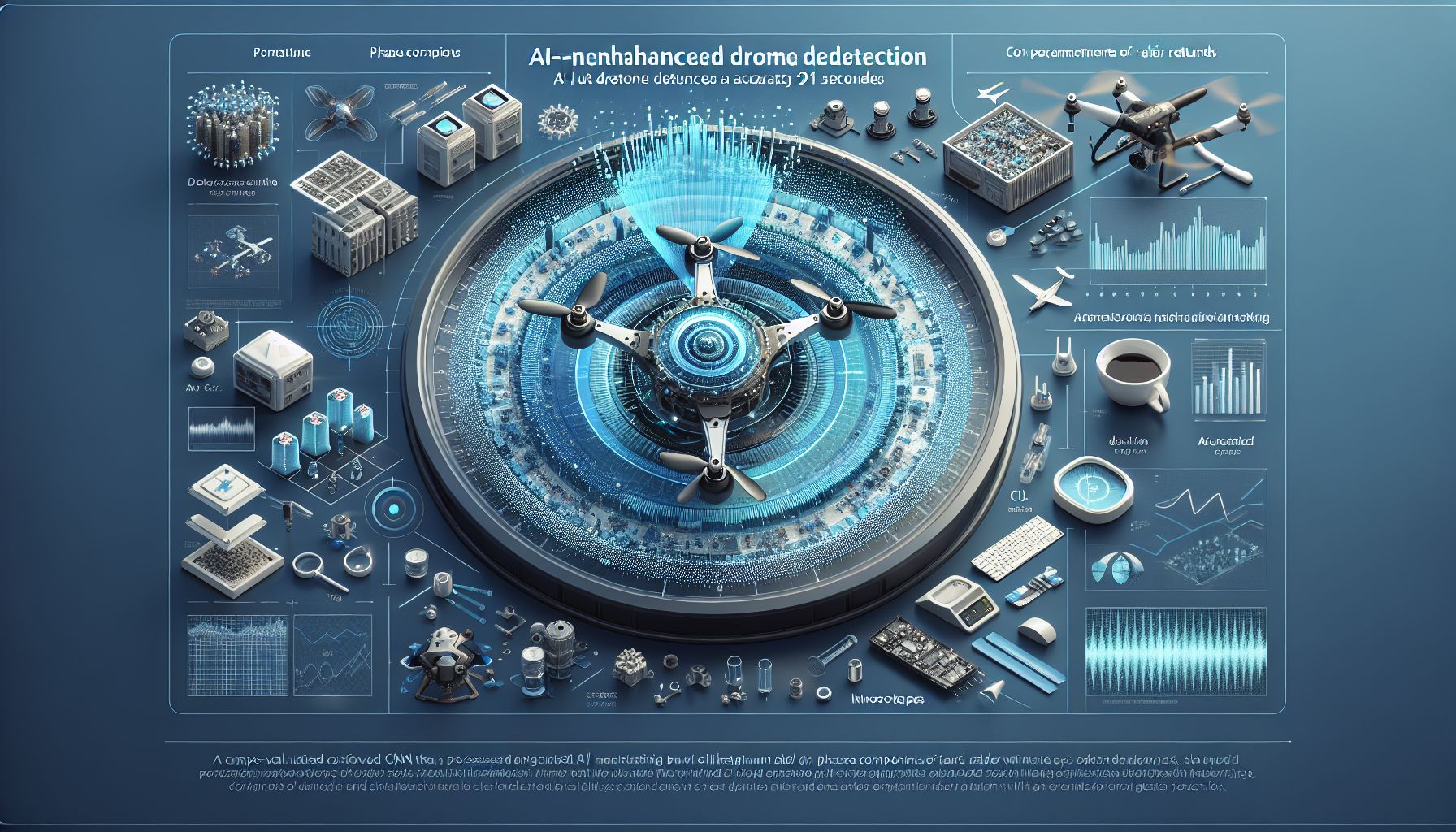
Recent advances in radar-based drone detection systems combine traditional radar technology with artificial intelligence, achieving remarkable 93% accuracy even in challenging low-signal conditions. The breakthrough uses complex-valued CNN models that process both magnitude and phase components of radar returns, enabling detection of drones within 0.01 seconds. This development is particularly significant as commercial drone threats continue to evolve, making reliable detection increasingly crucial for security infrastructure.
The Significance of AI and Radar Integration
The integration of artificial intelligence into radar-based drone detection systems marks a significant advancement in counter-drone strategies. By leveraging complex-valued convolutional neural networks (CNNs), the technology can now analyze both the magnitude and phase components of radar returns. This novel approach enhances the detection capabilities, allowing for accurate identification of drones even when they appear in the radar for extremely short intervals, such as 0.01 seconds[1].
Addressing the Challenges of Modern Drone Detection
The rapid proliferation of commercial drones poses a growing challenge to security systems worldwide. Traditional radar systems have struggled with detecting smaller drones and often generate false positives. However, the AI-enhanced radar system, with its ability to process complex-valued signals, significantly reduces these limitations[1]. This advancement is crucial as drones are increasingly used in both civilian and potentially hostile scenarios, necessitating robust detection mechanisms[2].
Applications and Implications for Security
The improved accuracy of radar-based systems has vast implications for both military and commercial security. In military settings, these systems can provide early warnings and precise tracking of unauthorized drone activities, thereby enhancing battlefield situational awareness. Commercially, they can protect critical infrastructure and public spaces from drone-related threats. The capability to distinguish drones from other aerial objects, such as birds, further underscores the system’s utility[3].
The Role of AI in Overcoming Detection Barriers
AI’s role in this radar technology breakthrough cannot be overstated. By using deep learning models, specifically complex-valued CNNs, the detection process becomes more robust against environmental noise and signal variations. This is particularly important in environments with low signal-to-noise ratios, where traditional methods may fail. The CNN model’s ability to maintain high detection accuracy under these conditions represents a leap forward in UAV detection technology[2].
Future Directions and Research Opportunities
As this technology continues to evolve, further research is expected to focus on enhancing the robustness of these systems across various environmental conditions and signal frequencies. This includes adapting the technology to detect drone swarms and improving resilience against adversarial machine-learning techniques. There is also potential for integrating this AI-driven radar system with other detection methods, such as RF and camera-based systems, to create a comprehensive multi-layered defense network[4].