ESA's Groundbreaking Mission to Create Artificial Solar Eclipses Launches Tomorrow
Paris, Tuesday, 3 December 2024.
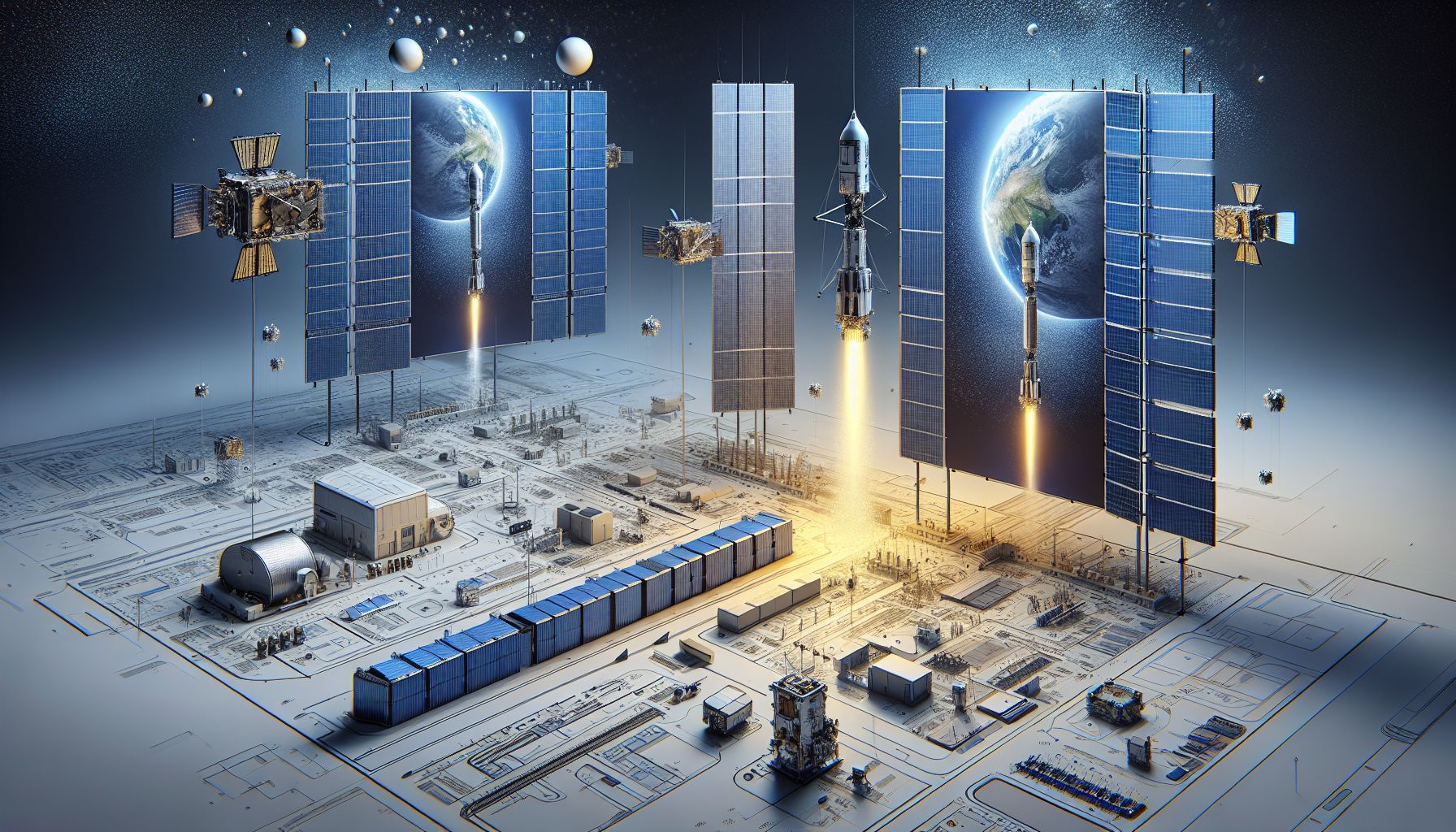
On December 4, 2024, ESA’s revolutionary Proba-3 mission will launch from India, featuring two satellites working in precise formation to create artificial solar eclipses. Using laser technology for millimeter-precise positioning, these spacecraft will maintain a 144-meter distance to study the Sun’s corona, enabling up to 50 artificial eclipses annually. This unprecedented capability will enhance our understanding of solar storms and improve space weather forecasting, potentially revolutionizing our knowledge of solar dynamics.
The Science Behind Artificial Eclipses
The European Space Agency’s Proba-3 mission represents a pioneering step in the field of solar observation. By creating artificial solar eclipses, the mission will enable unprecedented views of the Sun’s corona—a region that is typically obscured by the Sun’s bright light. The mission involves two satellites, the Occulter and the Coronagraph, which will maintain a precise distance of 144 meters. This configuration allows the Occulter to block the Sun’s light, providing the Coronagraph with a clear view of the corona. This method mimics the natural occurrence of a solar eclipse, offering a controlled environment for detailed studies[1].
Technological Innovations and Precision
The Proba-3 mission is a testament to the advances in space technology, particularly in formation flying and precision control. The satellites employ a range of technologies, including laser metrology systems, to maintain their formation with millimeter accuracy. This level of precision is crucial for the mission’s success, as the slightest deviation could affect the quality of data collected. The mission’s ability to create solar eclipses on demand, lasting up to six hours during a 19-hour orbit, is a significant technological achievement, allowing for extended observation periods that were previously impossible[2].
Implications for Space Weather and Climate Studies
By observing the solar corona, Proba-3 aims to advance our understanding of solar phenomena such as Coronal Mass Ejections (CMEs) and solar storms. These events can have profound effects on space weather, potentially disrupting satellites and other space-based infrastructure. The data collected will improve space weather forecasting, providing advanced warnings that are crucial for protecting technology on Earth. Additionally, the mission’s insights into solar dynamics will contribute to climate studies by offering detailed information about the Sun’s energy output and its impact on Earth’s climate systems[3].
Expert Insights and Future Prospects
Experts in the field have highlighted the significance of the Proba-3 mission as a milestone in space exploration. Andrei Zhukov, the Principal Investigator of Proba-3’s main instrument, remarked on the mission’s potential to deliver excellent scientific results, likening its capabilities to science fiction brought to life. The mission also sets a precedent for future space endeavors, demonstrating the feasibility and benefits of precision formation flying and artificial eclipse creation. As Proba-3 embarks on its journey, it opens new avenues for comprehensive solar research that could redefine our understanding of the Sun and its influences[4].