Analog Signal Processing Makes Breakthrough in Soft Robotics
Online, Thursday, 21 November 2024.
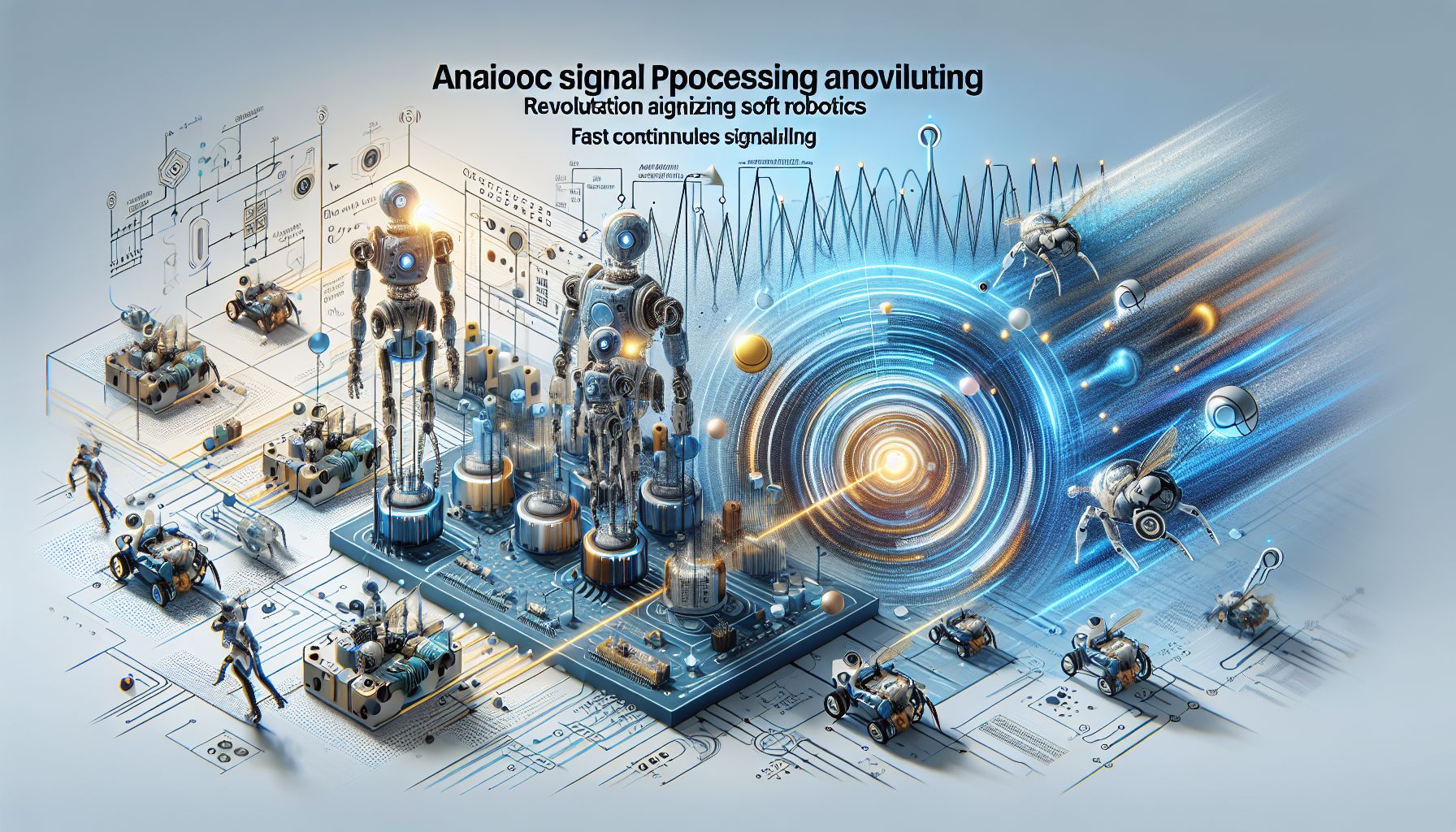
Recent advancements in analog signal processing are revolutionizing soft robotics, enabling real-time sensor data interpretation with unprecedented accuracy. This technology breakthrough allows robots to process continuous signals instantly, marking a significant shift from traditional digital approaches. While digital processing has dominated recent decades, analog processing’s ability to handle dynamic environmental interactions with lower latency and power consumption is proving crucial for next-generation robotic applications.
The Role of Analog Signal Processing
Analog signal processing is pivotal in soft robotics, where real-time data handling is essential due to the dynamic nature of interactions with the environment. This processing method involves the manipulation of continuous signals, allowing robots to interpret data from various sensors through techniques such as filtering, amplification, and modulation. By refining these signals before conversion to digital form, analog processing enhances the accuracy and reliability of sensor data, ensuring that robots can respond more effectively to external stimuli[1].
Advantages Over Digital Processing
While digital signal processing (DSP) offers precise computational capabilities, it often struggles with high power consumption and latency at higher frequencies. In contrast, analog signal processing handles these challenges more efficiently, particularly in applications requiring immediate adjustments based on continuous feedback, such as soft robotics. The low latency and reduced power usage make analog processing an attractive solution for integrating sensor data in real-time, which is critical for maintaining smooth and adaptive robotic movements in complex environments[2].
Applications in Soft Robotics
In soft robotics, the ability to process sensor data in real-time allows for more nuanced and adaptive interactions with the environment. This capability is vital for applications ranging from medical robots that must navigate dynamic human anatomies to industrial robots that adjust to varying material properties during manufacturing processes. By utilizing analog signal processing, these robots can achieve smoother operation and more precise control, thus enhancing their functional capabilities and broadening their application scope[1].
Future Directions and Learning Resources
As the field of analog signal processing continues to evolve, ongoing research is likely to yield even more sophisticated techniques and applications. For those interested in delving deeper into this field, resources such as peer-reviewed journals and online platforms offer valuable insights into current advancements and practical implementations. The journal ‘Circuits, Systems, and Signal Processing’, for example, regularly publishes high-quality articles that explore cutting-edge developments in the area[3]. Engaging with these resources can provide a solid foundation for applying analog signal processing concepts in real-world projects.