Innovative Analog Design Simplifies Power Transfer Switches in Europe
Berlin, Wednesday, 16 July 2025.
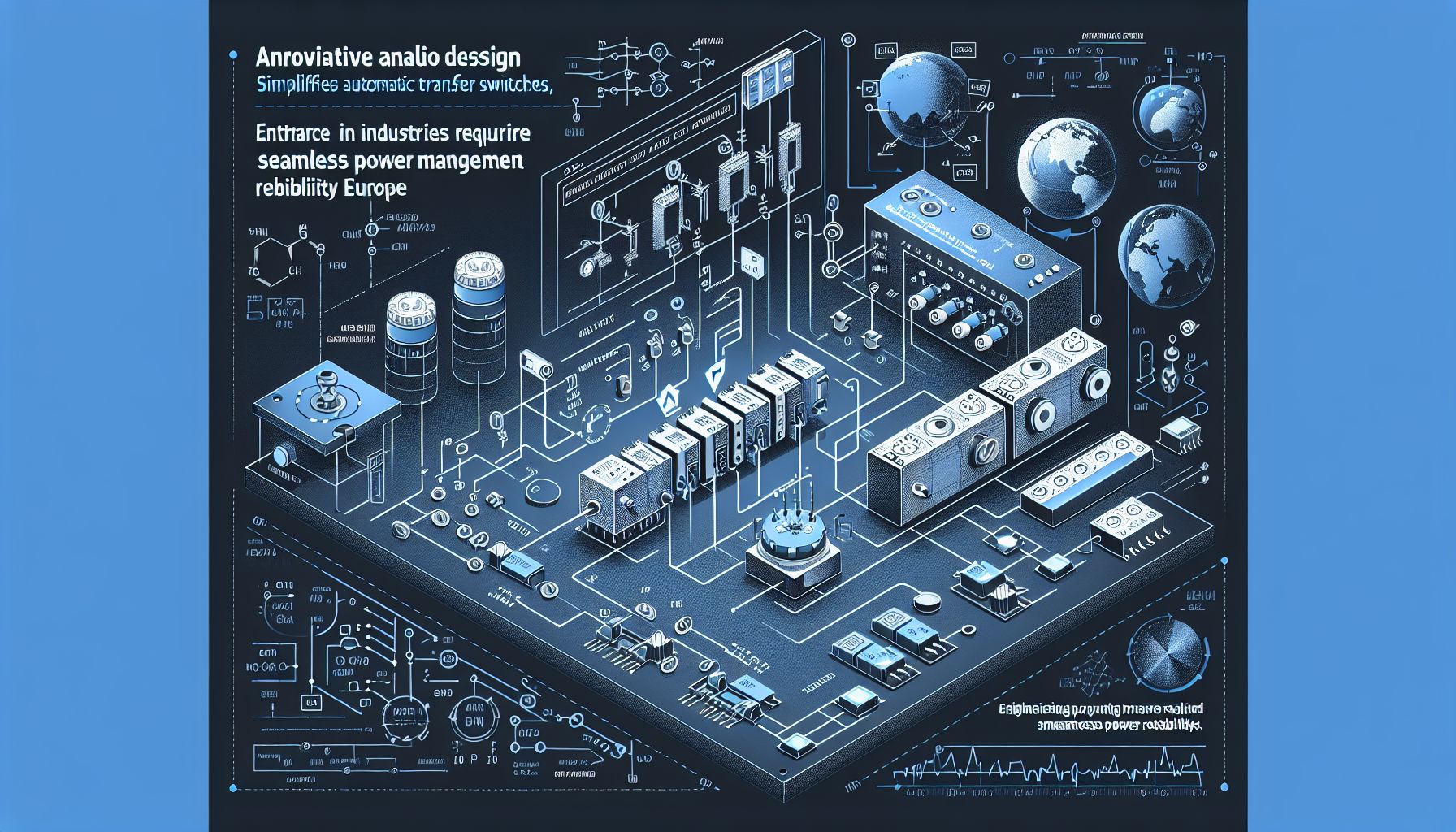
A new analog electronics design simplifies automatic transfer switch implementation, improving power management reliability. This innovation supports industries requiring seamless backup power solutions.
Analog Design Elevates ATS Implementation
The latest advancements in analog electronics have led to the creation of a simplified design for Automatic Transfer Switches (ATS), which are crucial for switching electrical loads between primary and backup power sources automatically during outages. This advancement significantly eases the integration and operational process, making it more accessible for engineers working on critical systems, particularly within Europe where power reliability is paramount [1]. The development supports compliance with European energy management regulations, ensuring robust energy security and efficiency [2].
Technical Innovations and Circuit Analysis
The core innovation involves a simplified circuit design utilizing an NE555P timer IC, a well-known component in analog circuits, combined with other passive elements like power relays, resistors, and capacitors to achieve a reliable ATS setup [1]. This design includes a strategically set 2.4-second activation delay feature using a 47-kΩ resistor and a 47-μF capacitor, ensuring that power stability is restored before reconnection, preventing any electrical surges post-outage [1]. Such solutions are ideal for industries that cannot afford any downtime, such as data centers and healthcare facilities [3].
Applications in Diverse Industries
The ATS’s adoption spans various sectors, from commercial to automotive, reflecting its versatility and reliability. For instance, automotive electronics integrate this design to manage seamless power shifts in electric and hybrid vehicles, ensuring no interruption in power supply during transitions between power modes [1]. Moreover, commercial ATS models have been praised for their ease of installation, robust performance, and ability to maintain continuous power, central to industries reliant on uninterrupted operations like telecommunications and financial services [4].
Design Considerations and Future Prospects
When designing an ATS, engineers must consider factors such as load capacity and environmental conditions, ensuring the selected components withstand projected operational demands [2]. The NE555P-based ATS presents a cost-effective alternative to commercial systems without compromising performance, though care must be taken in component selection, especially with the current ratings of relays used [1]. With the demand for waterproof and durable ATS further increasing, future designs may integrate enhanced protective features and smart control systems to further ensure reliability and efficiency [1][4].