Boeing Machinists Reject 35% Raise, Prolonging Costly Strike
Seattle, Thursday, 24 October 2024.
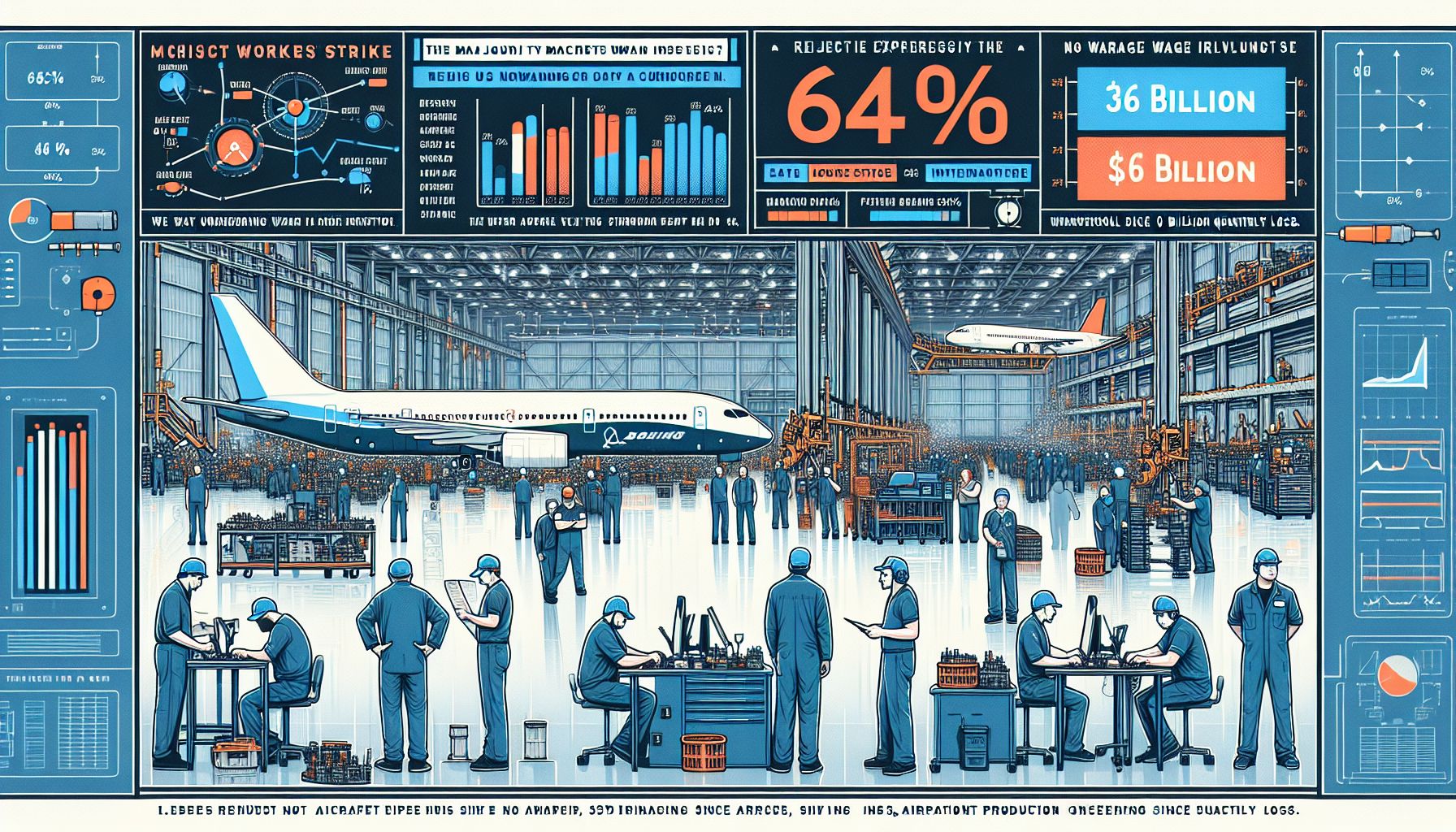
Boeing’s machinists voted against a new labor contract offering a 35% wage increase over four years, extending a strike that has halted most aircraft production since September 13. The rejection, supported by 64% of voters, deepens Boeing’s financial woes, with the company reporting a $6 billion quarterly loss.
A Prolonged Dispute
The machinists’ strike, which began on September 13, 2024, has now entered its sixth week, impacting Boeing’s production capabilities and financial stability. Boeing’s offer, labeled as the ‘best and final,’ was turned down by a significant majority of the International Association of Machinists and Aerospace Workers (IAM) members. The proposal included not only the wage increase but also enhanced 401(k) contributions and a commitment to build the next aircraft in the Pacific Northwest[1][2]. However, the lack of pension reinstatement remains a sticking point for union members who have seen benefits erode over the past decade[3].
Financial and Operational Impacts
Boeing’s financial troubles are mounting, with a $6 billion loss reported for the third quarter of 2024. The strike alone is costing the aerospace giant approximately $100 million each day, contributing to a significant cash burn that threatens the company’s operational continuity[4]. The halted production affects not only Boeing but also its suppliers, such as Spirit AeroSystems, which has announced potential furloughs for workers, further complicating the already fragile aerospace supply chain[5].
Leadership and Negotiations
Newly appointed CEO Kelly Ortberg faces the daunting task of navigating through this labor dispute amidst calls for a cultural overhaul within Boeing. Ortberg has emphasized the importance of stabilizing the business and improving labor relations, yet the path to resolution remains uncertain[6]. Despite Acting U.S. Labor Secretary Julie Su’s involvement in restarting negotiations, no new discussions have been scheduled, leaving the strike’s resolution date unclear[7].
Industry-Wide Implications
The ongoing strike is not just a concern for Boeing but is also sending ripples across the entire aerospace industry. With a backlog of approximately 5,400 aircraft orders, the delay in production could impact global airline operations and market shares[8]. Furthermore, the strike highlights broader issues in labor relations within the aerospace sector, potentially setting precedents for future negotiations across similar industries[9].