Texas Instruments Unveils Groundbreaking AI-Enabled Microcontrollers
Dallas, Monday, 11 November 2024.
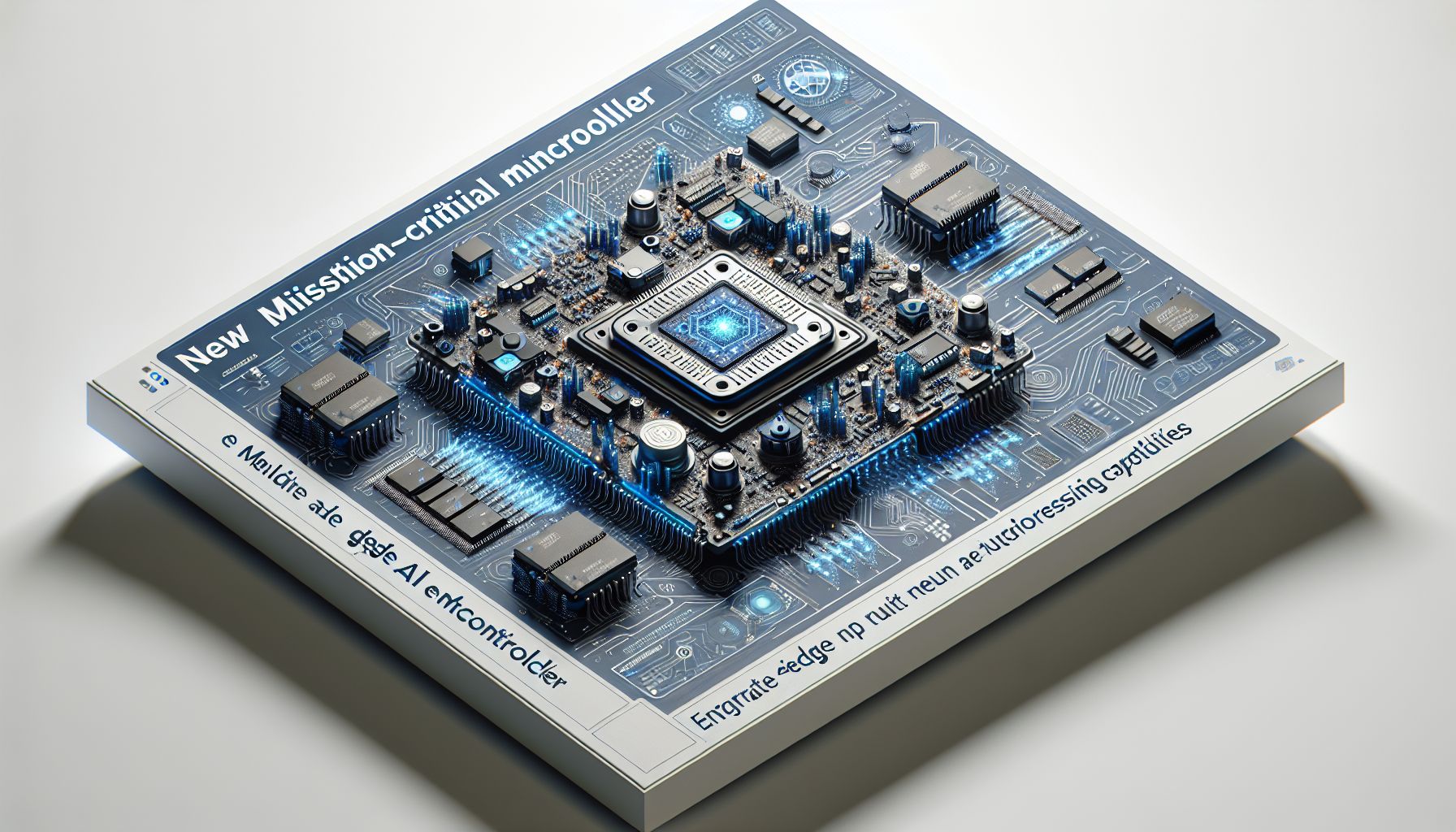
Texas Instruments introduces new mission-critical microcontrollers integrating edge AI and real-time control capabilities. The TMS320F28P55x series, featuring a neural processing unit, promises enhanced efficiency in applications requiring precise control and rapid data processing. This innovation marks a significant advancement in microcontroller technology, potentially revolutionizing industrial and automotive applications.
Revolutionizing Real-Time Control with Neural Processing
The TMS320F28P55x series, unveiled by Texas Instruments (TI), represents a leap forward in microcontroller technology by incorporating a neural processing unit (NPU). This integration not only enhances decision-making capabilities but also significantly increases real-time performance. By offloading AI processing from the primary core, these MCUs provide rapid and precise control essential for complex industrial and automotive applications. The NPUs are engineered to handle a wide range of tasks, from predictive maintenance to advanced sensor data interpretation, thereby ensuring higher accuracy and reliability in real-time operations[1].
Advanced Features and Performance Metrics
The TMS320F28P55x series boasts impressive specifications, including up to 1.1 MB of on-chip Flash memory, 24 PWM channels, and 39 ADC channels, allowing for extensive connectivity and data handling. The NPUs facilitate a 5 to 10 times decrease in latency for detection operations compared to conventional MCU code, making them highly efficient for applications requiring swift response times. Furthermore, the series supports complex convolutional neural network models, enabling robust analysis and decision-making processes in dynamic environments[1].
Comparative Edge: TI’s C2000 Family
Comparing the TMS320F28P55x to other products in the market, such as Renesas’ RZ series and Ceva’s SensPro2 DSP, TI’s offering stands out due to its dedicated neural processing capabilities combined with robust real-time control. While Renesas focuses on high-resolution HMI and industrial Ethernet connectivity, and Ceva emphasizes energy-efficient sensor fusion, TI provides a unique blend of AI enhancement and control precision. This positions the TMS320F28P55x series as a versatile solution for industries that demand both high computational power and real-time functionality[2][3].
Use Cases and Industry Applications
The versatility of the TMS320F28P55x series makes it suitable for a variety of applications, from automotive systems that require fault tolerance and low latency to industrial setups needing precise motor control and diagnostics. For instance, its application in predictive maintenance can drastically reduce downtime by accurately detecting potential equipment failures in advance. Additionally, the series’ ability to run complex sensor data interpretation models makes it valuable for sectors such as renewable energy, where accurate arc fault detection can prevent costly outages[1][4].
Conclusion and Recommendations
Texas Instruments’ new mission-critical MCUs offer a compelling blend of AI and real-time control capabilities, setting a new standard in the industry. For users in sectors like automotive and industrial automation, these MCUs provide unparalleled performance in terms of speed, accuracy, and reliability. The TMS320F28P55x is ideal for engineers seeking to enhance system efficacy with cutting-edge AI technology. Meanwhile, for those focused on energy efficiency and sensor-based applications, exploring complementary technologies like Ceva’s DSPs may also be beneficial. Overall, TI’s innovation ushers in a new era of intelligent, mission-critical microcontrollers that promise to transform their respective fields[1][3].