MDT Unveils Advanced TMR Sensors for Gaming Joysticks
Munich, Monday, 11 November 2024.
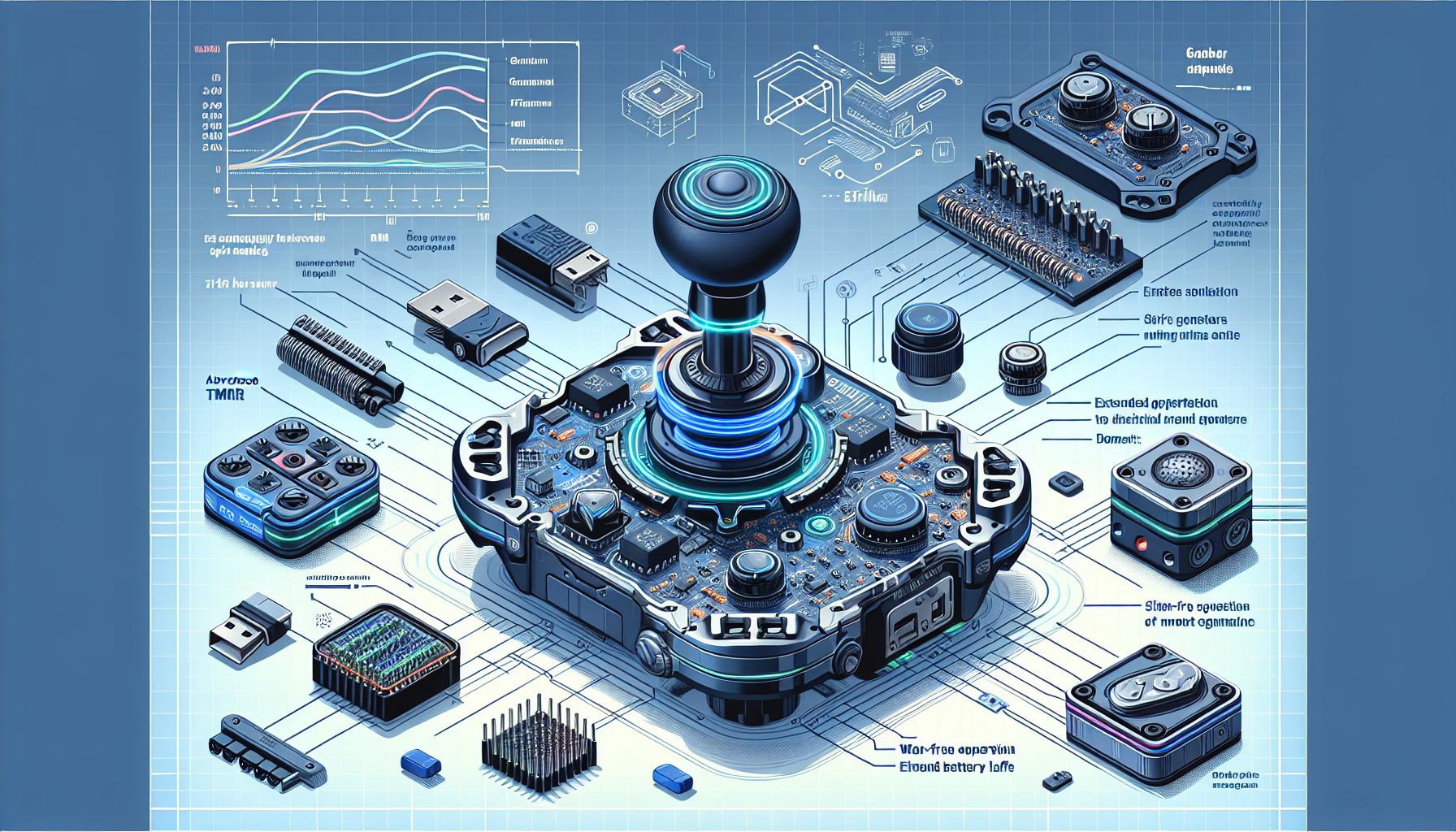
MultiDimension Technology introduces TMR2615/TMR2617 sensors at Electronica and SPS, promising enhanced precision for gaming controllers. These sensors offer wear-free operation, extended battery life, and high signal-to-noise ratio, potentially revolutionizing the gaming experience with more responsive controls.
Introduction to TMR Technology
MultiDimension Technology (MDT) has introduced a new line of Tunneling Magnetoresistance (TMR) sensors at the prominent Electronica and SPS trade shows. These sensors, specifically the TMR2615 and TMR2617 models, are designed to enhance gaming controller experiences by offering features such as wear-free operation and extended battery life. The TMR technology integrates programmable ASIC with factory presets, ensuring consistency and high performance for gaming enthusiasts[1].
Technical Advantages of TMR Sensors
The TMR sensors promise several technical advantages over traditional Hall-effect sensors. Notably, they operate with a non-contact design that ensures stability and longevity, eliminating drift—an issue that often plagues joystick performance over time. Furthermore, these sensors consume less than 0.3 mA, substantially reducing energy consumption and enhancing battery life by 5 to 10 times in comparison to Hall-effect sensors. The high signal-to-noise ratio and large dynamic range also contribute to improved precision and responsiveness during gameplay, which are critical for competitive gamers[1][2].
Comparison with Existing Technologies
In direct comparison to Hall-effect sensors, TMR technology showcases superior temperature stability, making it reliable across various environmental conditions. The compact dimensions of TMR2615, at 2x2x0.55 mm and 1.6x1.6x0.5 mm, allow for integration into a wide range of gaming devices without compromising on performance. The TMR2617 is compatible with standard SOT23-3 footprints, facilitating easy adoption by existing manufacturers[1].
Market Impact and Industry Reception
The introduction of the TMR sensors has been met with positive feedback across the industry, with rapid market recognition and mass production achieved by Q2 2024. Industry reviews highlight the shift from traditional technologies, as noted by Tom’s Guide’s endorsement, ‘So long Hall Effect – I’m only using controllers with TMR sensors from now on.’ Additionally, the technology’s applications are expanding beyond joysticks, with MDT developing TMR sensors for magnetic gaming keyboards and mouse scroll wheels, further solidifying its market presence[1][3].
Future Prospects and Recommendations
Looking ahead, MDT plans to showcase its innovations at upcoming exhibitions in Munich and Nuremberg, reinforcing its commitment to driving innovation across various user experiences. For developers and manufacturers in the gaming peripherals market, adopting TMR technology could provide a competitive edge by offering players superior control and extended device longevity. As the TMR sensors market is projected to grow significantly, driven by the increasing demand for electric vehicles, robotics, and IoT applications, MDT’s advancements position it well for future success[1][4].