FPGA Breakthrough: AI Accelerator for Low-End Embedded Devices
Reddit Online Community, Tuesday, 15 October 2024.
A novel FPGA-based AI accelerator aims to bring artificial intelligence capabilities to low-powered embedded systems like ESP32 cameras. This innovation could democratize AI integration in cost-effective hardware, potentially revolutionizing edge computing and IoT applications.
Revolutionizing Edge Computing and IoT
The introduction of an FPGA-based AI accelerator for low-end hardware marks a significant leap forward in edge computing. By enabling AI tasks on devices such as ESP32 cameras, this technology opens new avenues for affordable and energy-efficient AI applications. The integration of AI in cost-effective hardware could drastically enhance the functionality of IoT devices, making sophisticated data processing accessible at the edge without relying on cloud services.
Technical Specifications and Capabilities
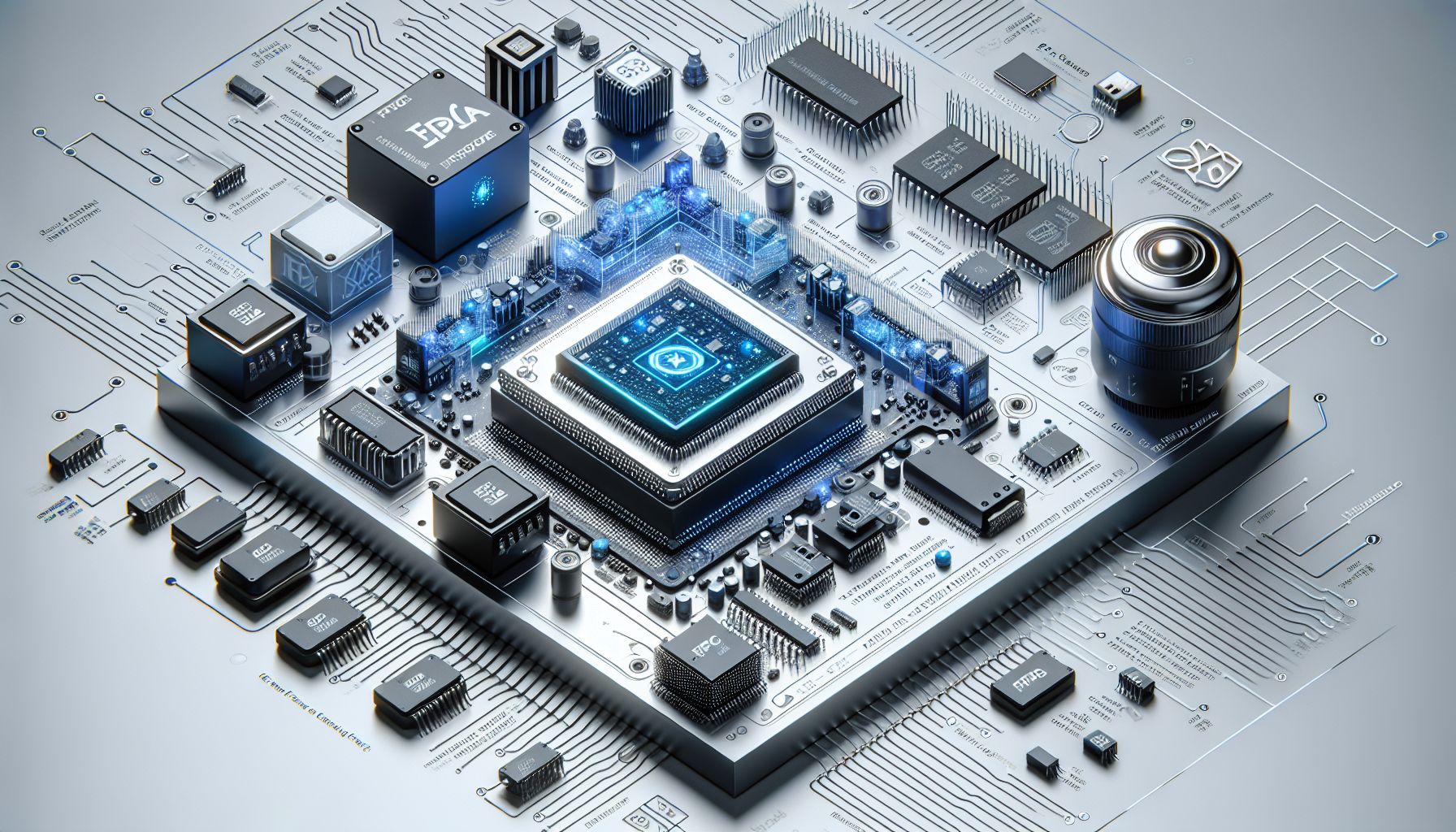
This FPGA-based AI accelerator incorporates a matrix multiplication unit and specialized hardware for performing convolutions and activation functions. Additionally, it includes a digital signal processing (DSP) unit for audio processing, complemented by image processing capabilities. The design integrates a custom instruction set to manage the internal operations of the accelerator, alongside a RISC-V core for executing minor tasks. These components collectively allow for complex AI tasks on minimal hardware, offering low latency and power consumption. The use of Gowin Tang Nano FPGAs ensures that even low-end microcontrollers like Arduino and ESP32 can achieve AI functionality, enabling applications such as intrusion detection and wake word recognition locally on devices.
Comparative Advantages Over Traditional Architectures
The FPGA accelerator’s architecture presents notable advantages compared to traditional processing systems like GPUs. The reprogrammable nature of FPGAs provides flexibility and extended product lifecycles, which are particularly beneficial in rapidly evolving AI fields. Unlike GPUs, which typically require more power and processing resources, FPGAs can optimize energy efficiency while maintaining high performance. This makes them particularly suitable for applications requiring real-time processing and low power consumption, such as in industrial, automotive, and medical fields. The ability to perform AI tasks directly on low-end devices without additional hardware components significantly reduces costs and deployment complexity.
Potential Impacts and Future Developments
The potential impact of this FPGA-based AI accelerator is vast, as it could transform how AI is implemented across various industries. By reducing reliance on cloud-based AI processing, this innovation supports the growing trend towards localized computing, enhancing data privacy and reducing latency. Future developments may focus on expanding the range of supported AI models and further optimizing the accelerator’s performance. As more industries recognize the value of integrating AI into embedded systems, the demand for such accelerators is expected to rise, driving further advancements in FPGA technology and AI capabilities.