Neuromorphic AI: 3D Integration Reshapes Hardware Security
Global, Sunday, 20 October 2024.
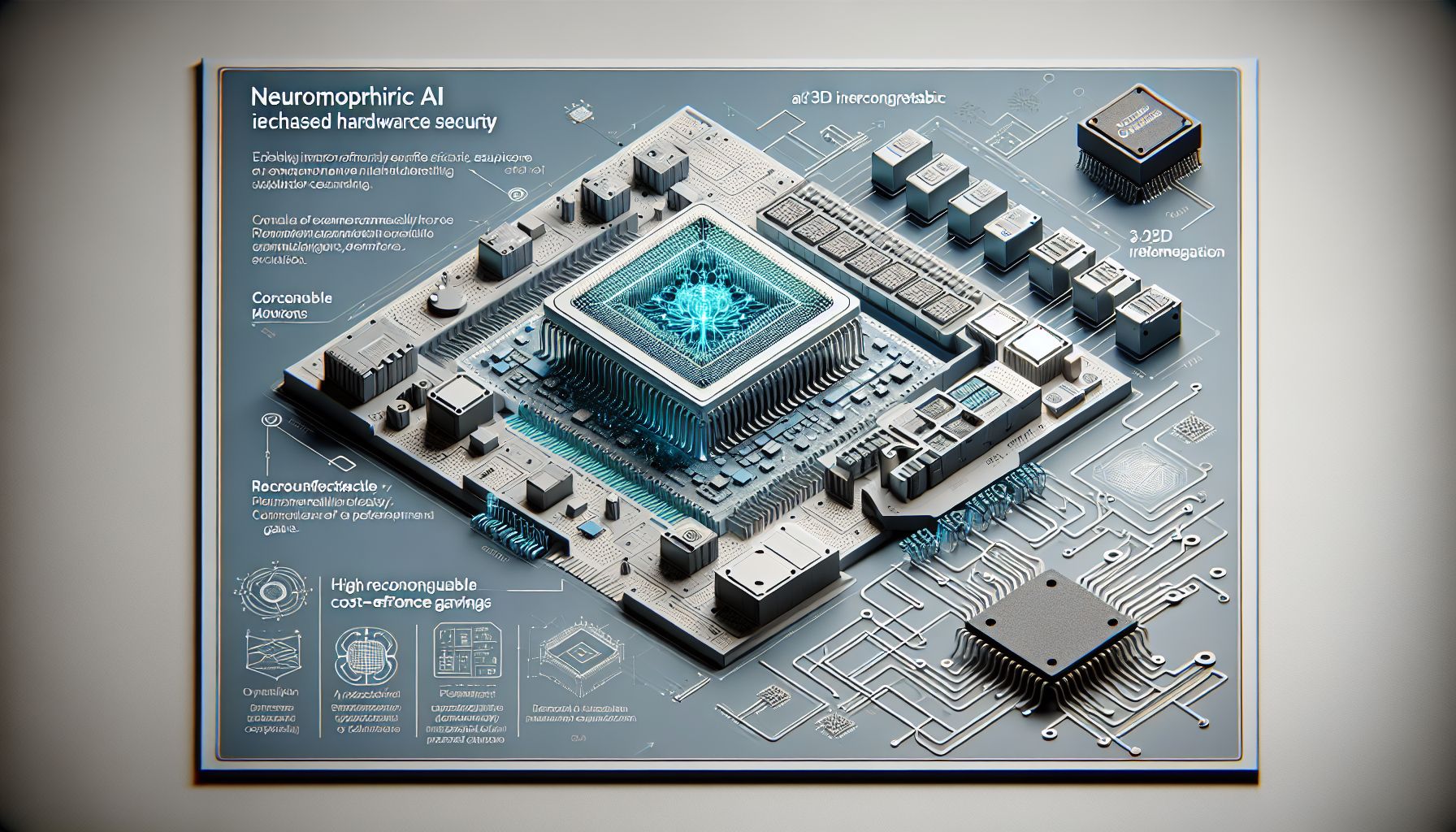
3D integration revolutionizes neuromorphic computing, enhancing AI hardware security. This technique stacks silicon layers, improving interconnectivity and efficiency. It offers reconfigurability, cost-effectiveness, and performance gains, paving the way for more robust and adaptable AI systems.
The Rise of Neuromorphic Computing
Neuromorphic computing is at the forefront of the AI revolution, drawing inspiration from the human brain’s architecture to process information more efficiently. This approach mimics neural structures to achieve superior computational efficiency, flexibility, and power management. As AI systems become increasingly integrated into critical applications, ensuring their security becomes paramount. The recent strides in 3D integration technology present an innovative avenue to bolster the security and functionality of neuromorphic hardware.
Security Challenges in Neuromorphic Hardware
With the proliferation of AI applications, neuromorphic hardware must contend with evolving security challenges. These systems, designed to emulate brain-like processing, require robust security measures to protect against vulnerabilities that could be exploited in various ways. As the hardware becomes more complex, so too do the potential threats. Addressing these concerns necessitates advanced techniques that can adapt to the dynamic landscape of AI threats, ensuring the integrity and reliability of neuromorphic systems.
3D Integration: A Paradigm Shift
3D integration emerges as a transformative solution in neuromorphic computing. By stacking silicon layers, this technique enhances interconnectivity and efficiency, crucial for improving system performance and reducing latency. The advanced architecture allows for reconfigurability, adapting to new functionalities without extensive redesigns, which is vital for evolving AI applications. Moreover, 3D integration is cost-effective, supporting incremental development and the seamless integration of new technologies, ultimately paving the way for more robust and adaptable AI systems[1].
Potential Implications and Future Directions
The integration of 3D technologies in neuromorphic systems represents a significant leap forward, not only in terms of performance but also in enhancing security frameworks. By allowing for structural reconfigurability and modular design, 3D integration can accommodate advanced security protocols tailored to the unique architecture of neuromorphic systems. As AI continues to evolve, the need for secure, efficient, and scalable hardware will become even more critical. The ongoing research and development in this field suggest a future where AI can operate with enhanced security and efficiency, meeting the growing demands of various industries.