AI Revolution in Textiles: $775 Million Growth Expected by 2028
New York, Thursday, 21 November 2024.
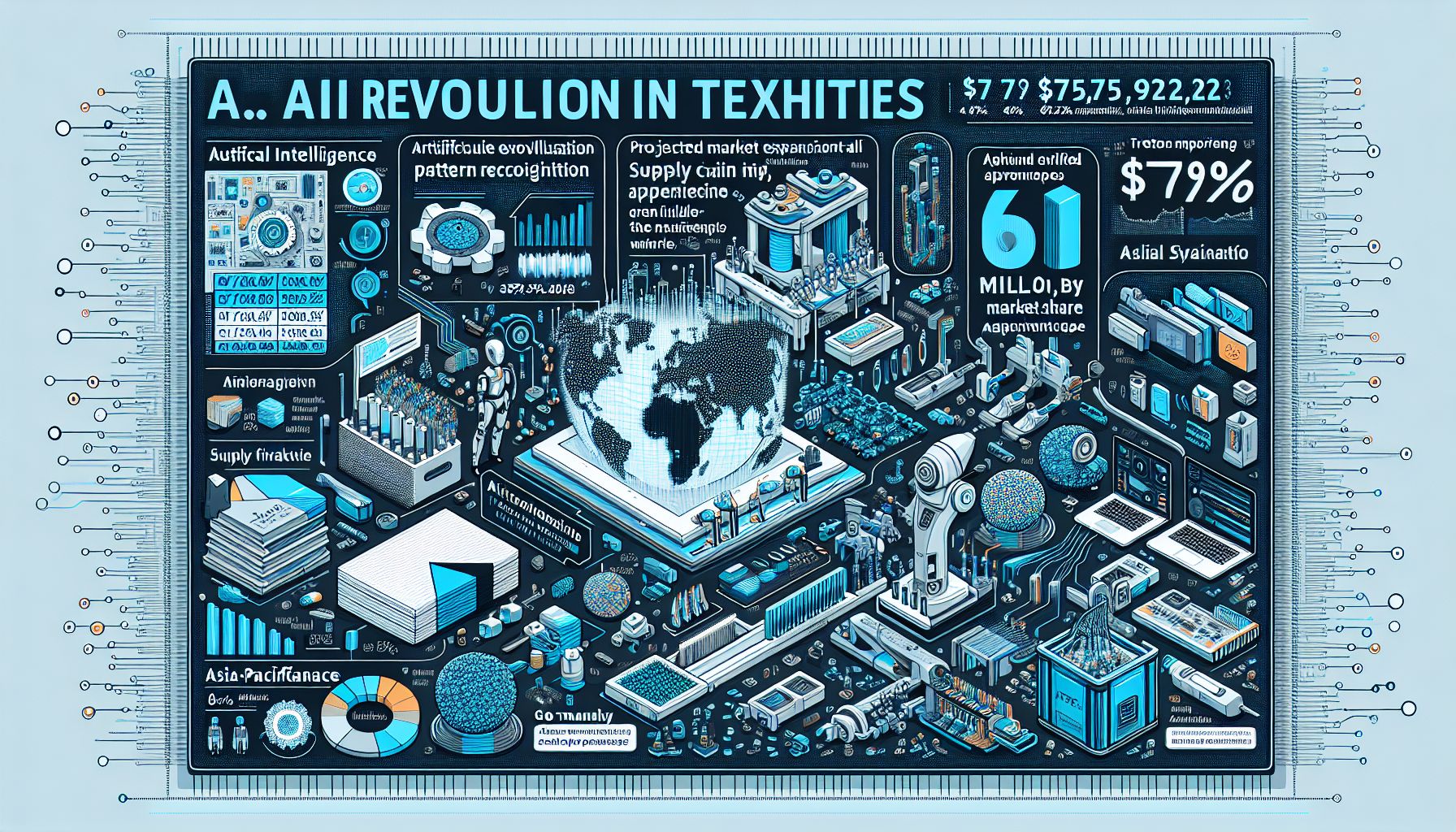
A transformative wave is hitting the textile industry as artificial intelligence drives a projected $775.92 million market expansion. Beyond automation, AI is revolutionizing everything from pattern recognition to supply chain management, while addressing critical challenges like the 63,000 unfilled textile apprenticeships in Germany alone. This technological leap promises enhanced efficiency, reduced waste, and improved sustainability across the global textile sector, with Asia-Pacific leading the charge at 44% market share.
Technological Advancements and Market Dynamics
The textile industry’s automation market is poised for unprecedented growth, with AI at the forefront of this transformation. This surge is not merely about replacing manual labor but redefining textile production with technologies like automatic curling, autolevellers, and shuttleless looms. These advancements optimize production efficiency and quality, a necessity as the industry aims to address the shortage of skilled workers, notably in Germany, where over 63,000 apprenticeship positions remain unfilled as of 2021[1]. The integration of AI into textile manufacturing processes, such as pattern recognition and real-time defect detection, ensures higher precision and reduces waste, setting a new standard for quality control[2].
Regional Influence and Market Players
Asia-Pacific (APAC) holds a significant position in this evolving market, commanding 44% of the global market share. This region’s dominance is driven by rapid technological adoption and facility upgrades that enhance energy efficiency[1]. Key players like ABB Ltd., Hitachi Ltd., and Siemens AG are spearheading innovations that revolutionize the industry, focusing on sustainable practices and energy-efficient technologies[1]. Meanwhile, in Europe, particularly Germany, efforts are underway to attract skilled labor and invest in educational programs to meet the demand for expertise in these high-tech environments[1].
AI’s Role in Sustainability and Production
AI not only enhances production efficiency but also plays a pivotal role in promoting sustainability within the textile industry. By streamlining operations, AI reduces water usage and energy consumption, particularly in dyeing and color-matching processes[2]. This shift towards greener practices is crucial as the industry faces increasing pressure to minimize environmental impact. Furthermore, AI facilitates personalized shopping experiences by analyzing customer preferences, thereby increasing consumer satisfaction and retention[2]. As companies continue to adopt AI-driven innovations, they are likely to see improvements in both their environmental footprint and bottom line.
Challenges and Future Outlook
Despite these advancements, challenges persist. The industry’s rapid technological evolution requires a workforce skilled in new technologies, which is currently lacking in many regions[1]. Additionally, the financial investment required for automation and compatibility with existing IT infrastructure poses hurdles for some manufacturers. However, as the industry adapts to these changes, the future looks promising. The ongoing transformation is expected to not only increase production efficiency but also contribute to a more sustainable and resilient textile sector. With AI and automation leading the charge, the global textile industry is on the brink of a significant evolution, promising a future where technology and sustainability go hand in hand.
Bronnen
- www.prnewswire.com
- aibusiness.com
- [](GPT: Technavio Report)