Neuromorphic AI Hardware: The Next Frontier in Computing
Silicon Valley, Monday, 14 October 2024.
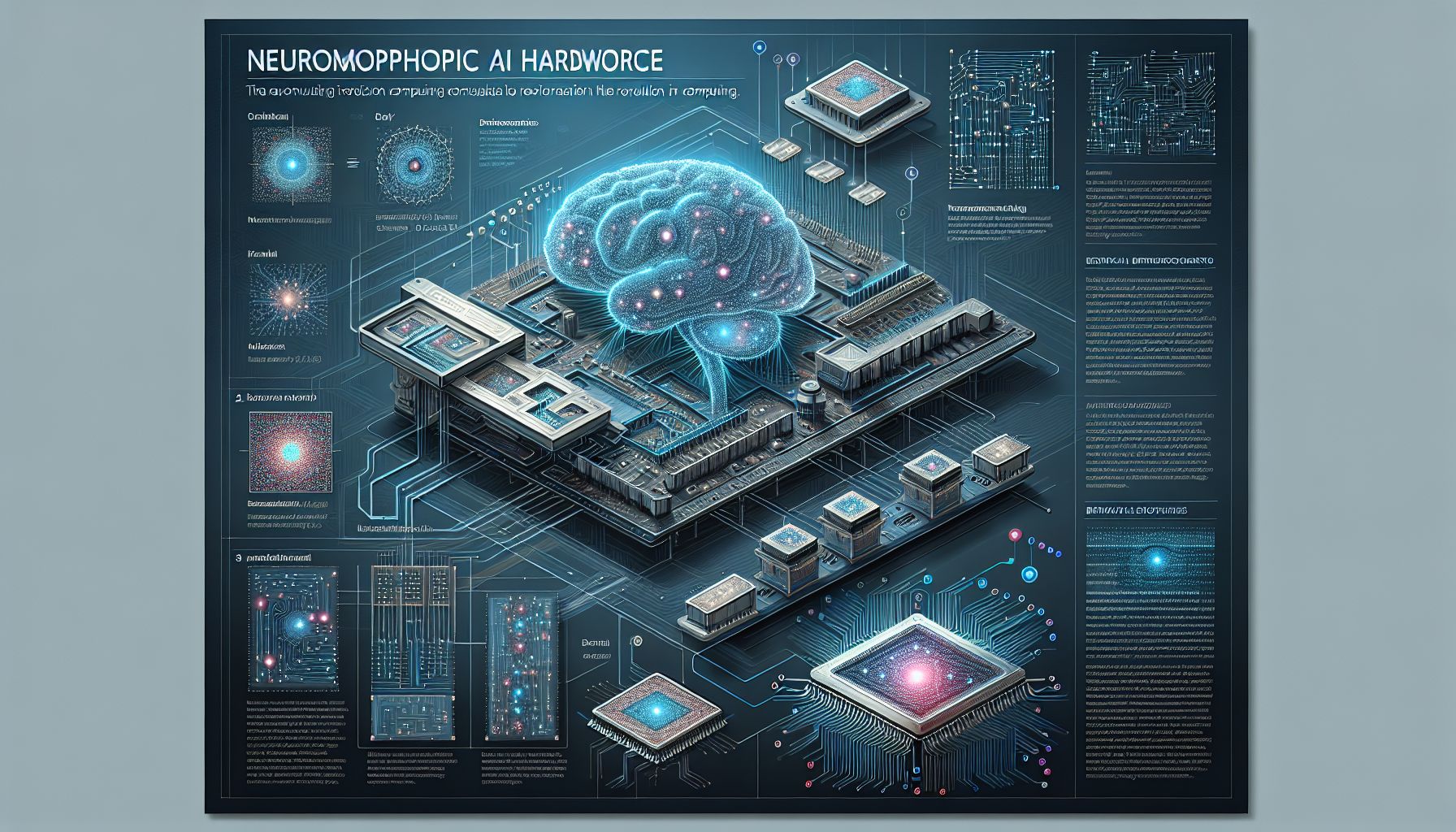
Recent advancements in neuromorphic AI hardware, particularly memristor technology, are revolutionizing computing. These brain-inspired systems promise enhanced efficiency and complexity in artificial neural networks, potentially paving the way for artificial general intelligence. Researchers are integrating memristors with conventional semiconductor technology, aiming for trillions of vertically stacked units to significantly boost processing power.
Advancements in Memristor Technology
Memristors, which are non-volatile memory devices capable of mimicking synaptic behavior, are at the forefront of neuromorphic computing advancements. This technology allows for circuits that are not only more efficient but also capable of complex computations akin to those performed by the human brain. Recent research focuses on enhancing the performance of memristors to scale circuit complexity and enrich the functionality of artificial neural networks. The integration of memristor neural networks with conventional semiconductor technology marks a significant leap forward, with the potential to handle more sophisticated tasks. According to materials scientist Hoskins, an ideal configuration would involve trillions of memristors vertically stacked, significantly increasing processing power and efficiency [1].
Potential Applications of Neuromorphic Systems
The potential applications for neuromorphic systems using memristor technology are vast and varied. In artificial intelligence, these systems could lead to enhanced neural networks that learn and adapt more efficiently. Robotics stands to benefit from improved sensory processing and decision-making capabilities, enabling robots to perform more complex tasks autonomously. Additionally, data storage could be revolutionized with high-density, low-power memory solutions, offering substantial improvements for data centers [1].
Research Insights and Future Directions
Konstantin Likharev from Stony Brook University has been at the forefront of this research, emphasizing memristors’ transformative potential. Findings published in the journal Nature suggest that a software-hardware co-designed model could lead to brain-inspired neuromorphic computing with remarkable energy efficiency and adaptability. This approach not only enhances computational capabilities but also aligns with emerging trends in AI hardware technology, focusing on energy-efficient and adaptive systems [1]. In a related development, the ‘Workshop on Neuromorphic In-Material Computation’ scheduled for October 28-30, 2024, in San Gimignano, Italy, will cover the latest advancements in the field, highlighting collaborations across physics, chemistry, and materials science [2].
Challenges and Industry Impact
Despite the potential, several challenges remain in the development and implementation of neuromorphic hardware. A significant bottleneck exists between computing algorithms and neuromorphic hardware, which hinders the full development of neural computing technologies. Experts suggest that bridging this gap requires multidisciplinary collaborations and innovative approaches to emulate brain-like computing efficiently [3]. Nevertheless, recent advancements, such as BrainChip’s Akida Pico chip, showcase the practical applications of neuromorphic devices in power-constrained environments. These chips, designed for edge computing, exemplify the industry’s gradual shift towards more efficient and specialized AI solutions [4].
Conclusion: The Road Ahead
As the field of AI hardware continues to evolve, the integration of memristors stands out as a promising avenue for achieving greater efficiency and complexity in artificial neural networks. Ongoing research and development in this area will likely pave the way for future innovations in neuromorphic computing, ultimately bringing us closer to achieving artificial general intelligence. With the support of collaborative research efforts and industry investment, neuromorphic hardware may soon become a cornerstone of next-generation computing technologies [1][2][3][4].