DIY Audio Enthusiasts Spark Interest with 2-Way Powered Analog Speakers
Online, Tuesday, 15 October 2024.
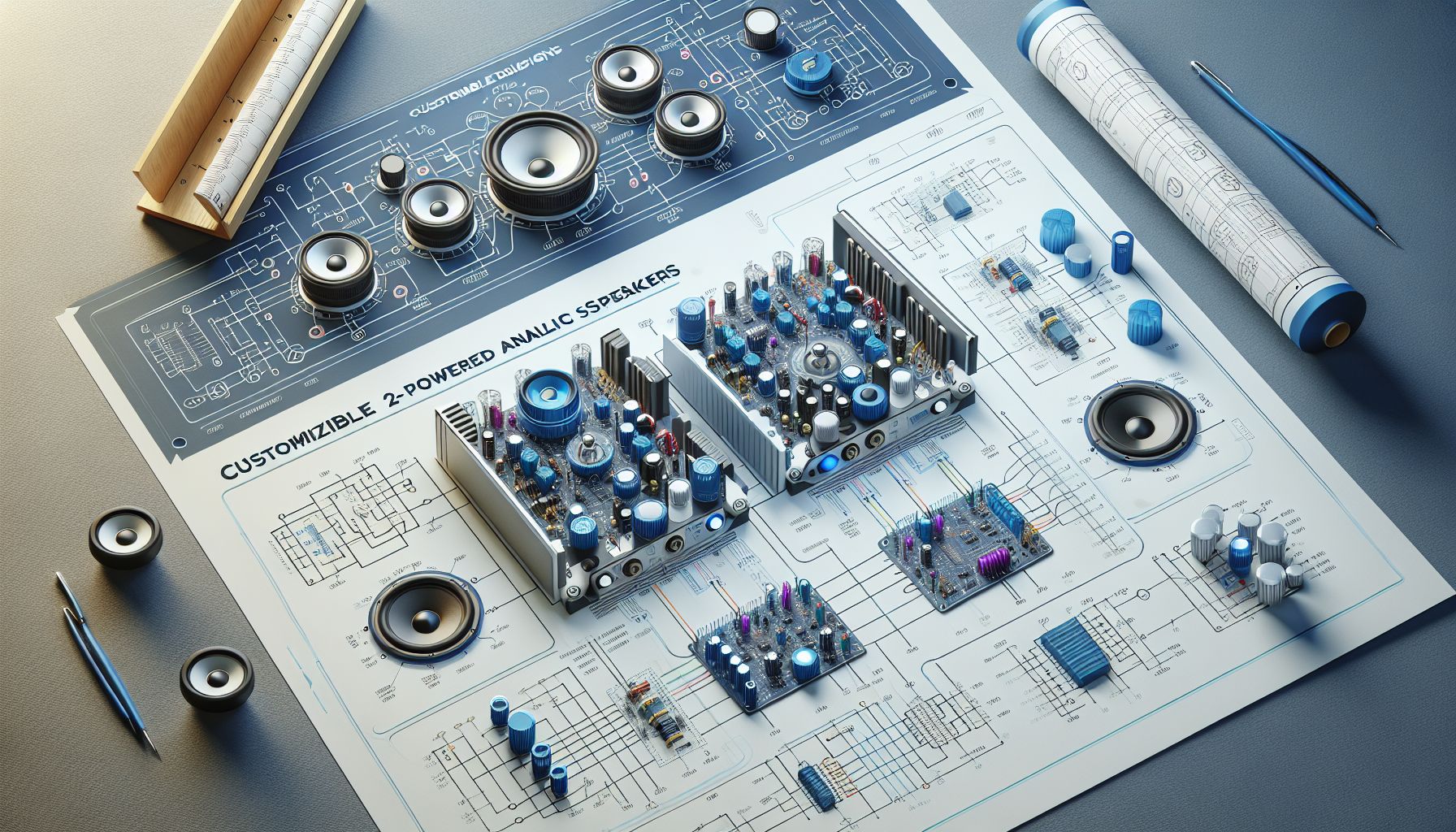
An electronics hobbyist has shared a design for customizable 2-way powered analog speakers, igniting excitement in the DIY audio community. The project showcases the potential for high-performance, flexible sound systems, appealing to both novices and experienced audiophiles alike.
Rise of DIY Audio Projects
The DIY audio community continues to thrive as enthusiasts increasingly seek to build personalized sound systems that cater to their unique preferences. The project in question, shared by a passionate hobbyist, underscores this trend. By offering a detailed design for 2-way powered analog speakers, it invites both newcomers and seasoned tinkerers to explore the intricacies of audio electronics. This surge in interest is indicative of a broader movement towards customization and hands-on involvement in the creation of consumer electronics.
Understanding the Components
Key to the success of this DIY project is the careful selection and integration of components. The speaker system incorporates a Peerless Tymphany SDS Woofer and a Dayton Tweeter, chosen for their complementary frequency ranges and sensitivity levels. The woofer, with a frequency range of 40 to 4,000 Hz and an impedance of 8 Ohms, pairs effectively with the tweeter, which covers from 2,500 to 20,000 Hz at 4 Ohms. The combination ensures a balanced sound profile suitable for a variety of audio settings[1].
Amplification and Power Supply
The project utilizes two amplifiers: a WONDOM AA-AB32189 2x100W Class-D amplifier and a Wondom 1x60W Class D amp. These amplifiers are powered by a Mean Well LRS-150-24 and a Mean Well RT-65B power supply, respectively. The choice of Class-D amplification reflects the need for efficient power use and minimal heat generation, critical for maintaining performance in compact speaker systems. Additionally, the dual power supply configuration allows for a stable and isolated power flow to different components, reducing interference and improving overall audio fidelity[1].
Circuit Design and Customization
The circuit design is a crucial aspect of the project, emphasizing flexibility and performance. The enthusiast plans to build crossover components tailored to the drivers, allowing for precise control over sound reproduction. This ability to customize the crossover to match specific drivers is a significant draw for audiophiles who seek to fine-tune their systems to exacting standards. Moreover, the project encourages experimentation with different crossover designs, fostering a deeper understanding of audio dynamics and electronics[1].
Community Engagement and Feedback
The sharing of this speaker design on platforms like Reddit has sparked considerable discussion and feedback from the DIY community. Enthusiasts are not only exchanging tips on component compatibility and power distribution but also exploring innovative ways to enhance the design. This collaborative approach not only enriches the project but also strengthens the community, as members contribute their expertise and support each other in overcoming technical challenges[1].