Smart Chips Transform Wearable Health: Signal Processing Revolution Ahead
Global, Sunday, 24 November 2024.
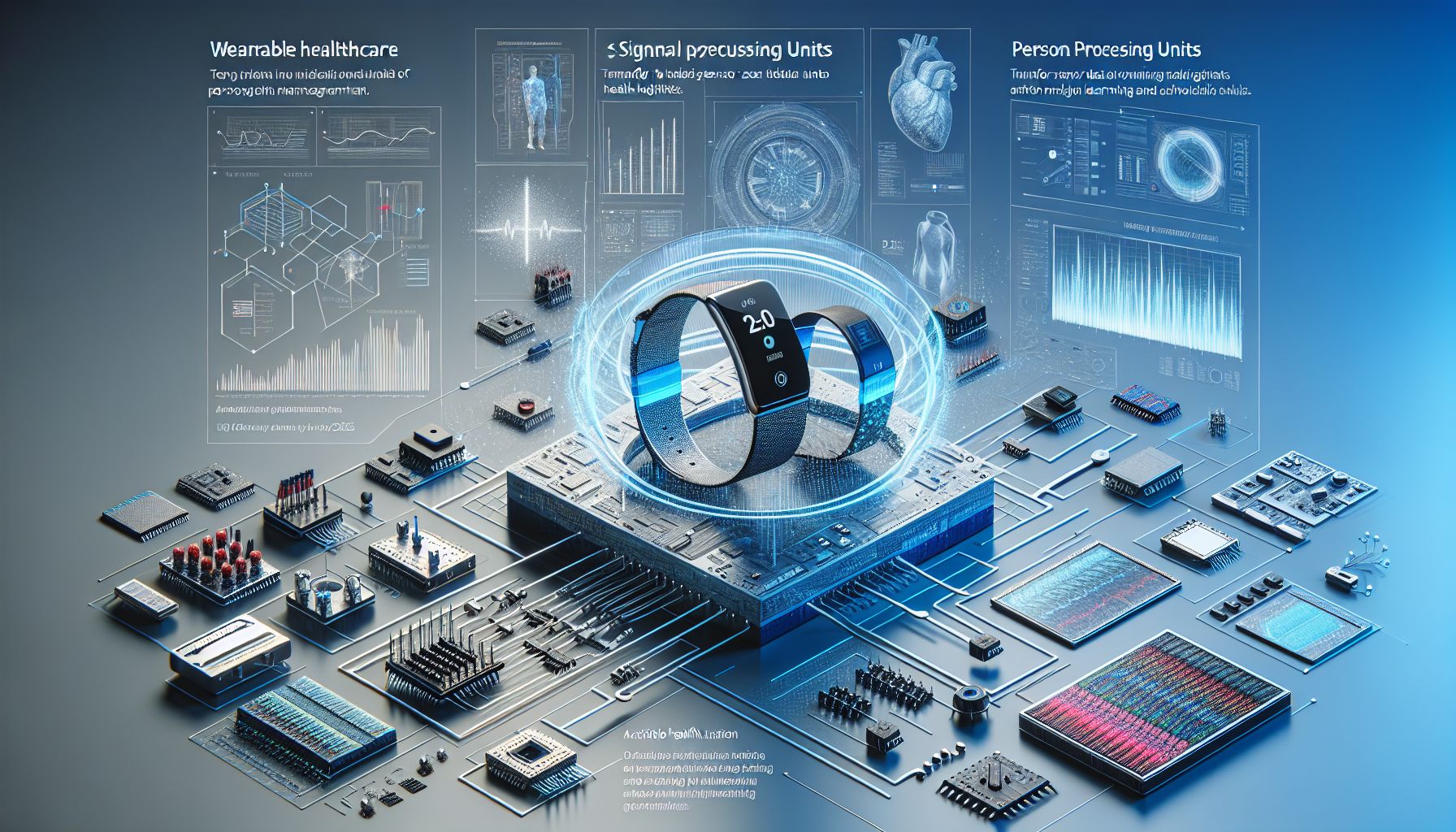
Signal processing units are revolutionizing wearable healthcare by transforming raw sensor data into actionable health insights. These specialized components, integrated with machine learning and advanced algorithms, enable real-time monitoring of vital signs while ensuring data accuracy through noise reduction. The technology promises to make health monitoring more accessible and efficient, potentially transforming personal healthcare management by 2025.
The Power of Signal Processing Units
Signal processing units (SPUs) are at the heart of this transformation, serving as the backbone for converting raw data from wearable sensors into meaningful health insights. These units are equipped with the capability to analyze, modify, and synthesize signals, making them essential for the accurate measurement of physiological parameters such as heart rate, temperature, and motion. By integrating advanced algorithms like the Fast Fourier Transform (FFT), SPUs can efficiently analyze frequency components, ensuring that the data captured is both precise and reliable. This is particularly important in wearable technology, where real-time feedback can significantly enhance user experience and health outcomes.
Machine Learning Integration
The integration of machine learning models with SPUs marks a significant leap forward in wearable technology. Machine learning enhances the interpretation of complex biological signals, allowing for more sophisticated health monitoring capabilities. For instance, by learning from historical data, these models can identify patterns and predict potential health issues before they arise. This predictive capability not only provides personalized health insights but also transforms wearable devices into proactive health management tools. The synergy between machine learning and signal processing thus represents a new era of personalized healthcare, where devices can offer tailored health advice based on individual data.
Edge Computing and Real-Time Analysis
Recent advancements in edge computing have further propelled the efficiency of SPUs in wearable devices. By processing data on the device itself or on a connected smartphone, edge computing eliminates the need for data to be sent to a centralized server for analysis. This reduces latency and enhances privacy, as sensitive health data does not need to leave the user’s immediate environment. The development of multimodal healthcare sensor patches exemplifies this trend, enabling continuous monitoring of vital signals such as skin temperature and electrocardiograms. This technology allows for immediate feedback and interventions, significantly improving the management of chronic conditions and overall health monitoring.
Implications for the Future of Healthcare
The implications of these technological advancements are profound. With the global sensor market projected to exceed USD 250 billion by 2035, driven by innovations in wearable technology, the healthcare sector stands to benefit immensely. These devices are not just limited to monitoring; they are poised to become integral components of health management systems, capable of diagnosing conditions in real time and suggesting interventions. As wearable technology becomes more ingrained in everyday life, the potential for these devices to improve health outcomes and reduce healthcare costs is immense. The integration of SPUs with machine learning and edge computing not only enhances device functionality but also paves the way for more personalized, efficient healthcare solutions.