Semiconductor Industry Partners to Decarbonize with Catalyze Initiative
Paris, Wednesday, 12 February 2025.
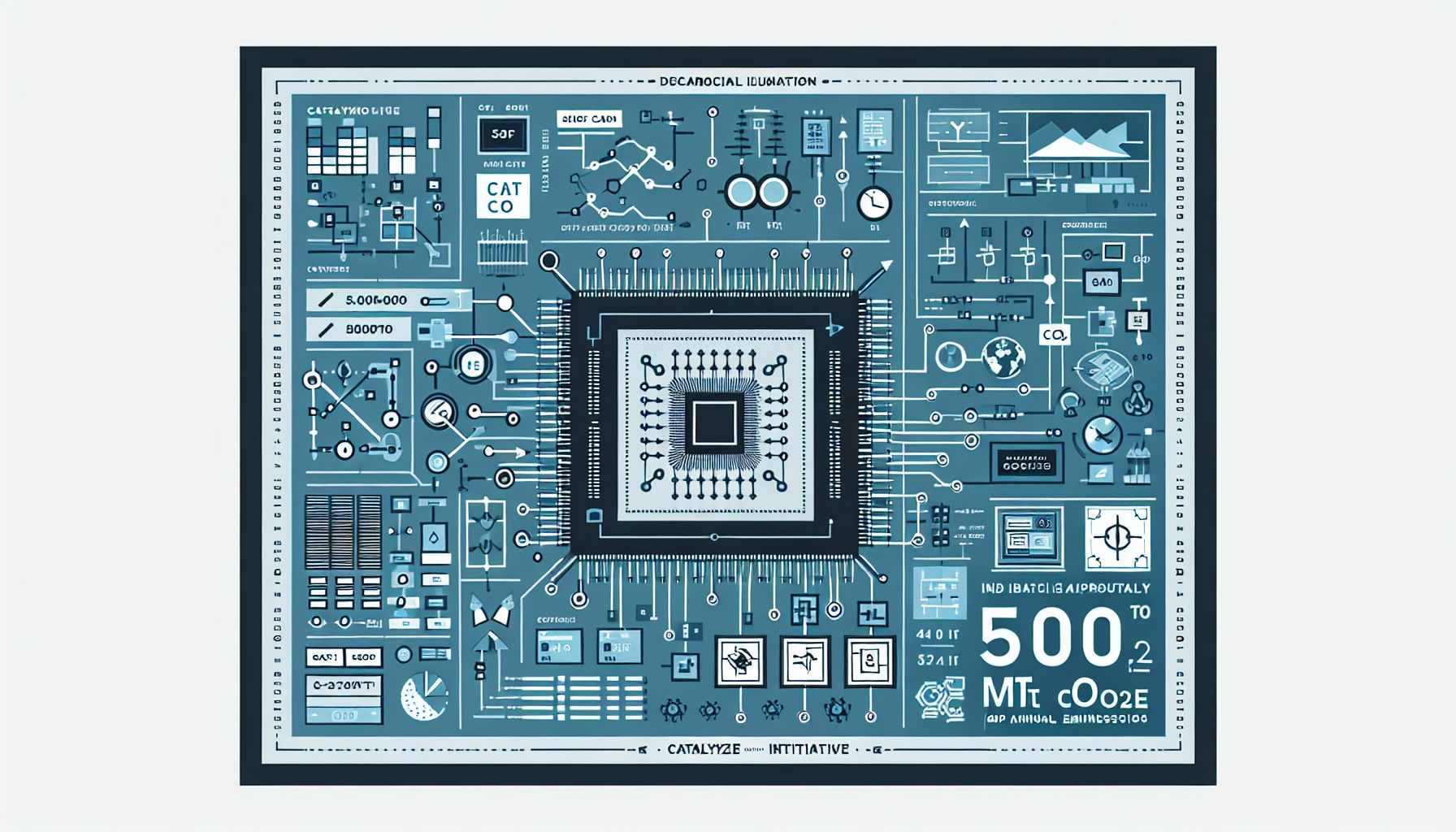
The semiconductor industry emits about 500 Mt of CO2e annually. Programs like Catalyze support renewable electricity adoption to meet environmental goals.
Industry-Wide Environmental Impact
The semiconductor industry faces significant sustainability challenges, with approximately 500 million tons of CO2e emissions annually, requiring a 50% reduction in energy consumption within the next decade to align with Paris Agreement targets [1]. Supply chain operations account for 80% of industry emissions, with electricity usage responsible for 83% of those emissions [1]. This environmental impact is further amplified by the rising demand for AI technologies, with data centers projected to see a 300% increase in CO2 emissions from 2025 to 2029 [4].
Catalyze Program Launch
In response to these challenges, Schneider Electric announced the Catalyze program on February 11, 2025, marking a significant step toward industry-wide sustainability [1]. The program has expanded from two to seven founding sponsors [1], demonstrating growing industry commitment to decarbonization. This initiative focuses particularly on scope 2 and 3 emissions reduction through renewable electricity adoption across the global semiconductor value chain [1].
Industry Leaders Taking Action
Major industry players are already implementing ambitious sustainability targets. Infineon aims for a 70% reduction in greenhouse gas emissions by 2025 compared to 2019 levels [2], while Nordic Semiconductor has achieved remarkable progress with a 74% reduction in Scope 1 and 2 emissions between 2019 and 2023, with 89% of their energy now coming from renewable sources [3]. These achievements demonstrate that significant emissions reductions are possible through coordinated action.
Economic and Market Implications
The global sustainable electronics and semiconductor manufacturing market shows promising growth potential, with electronic waste currently exceeding 55 million tonnes annually and only 20% being efficiently collected [6]. This represents approximately $60 billion worth of raw materials lost each year [6]. The industry’s energy consumption is projected to reach 237 terawatt hours globally by 2030 [7], highlighting the urgent need for sustainable practices and renewable energy adoption. The SMART USA Institute’s initiatives aim to reduce manufacturing costs by nearly half while improving chip yield by 40% and reducing greenhouse gas emissions by 30% within five years [5].
sources
- blog.se.com
- www.techinsights.com
- www.nordicsemi.com
- www.techinsights.com
- www.alligator.org
- www.globenewswire.com
- www.wtwco.com